
One of the debates in aquaculture that remains unresolved is the question of whether species which, by nature, roam several kilometres a day, or migrate ever greater distances between seasons, have an intrinsic need to do so, or whether they simply do this in order to find food and species-appropriate conditions such as temperature, oxygen, substrate, etc. If the latter is true, do they feel well when farmed within a limited area, provided they are supplied with food and the appropriate conditions? To find this out, one would have to conduct choice experiments in very large tanks offering different conditions – which would involve unprecedented costs and has therefore never been carried out. A tiny population of humpback whales, threatened with extinction, might – or might not – provide a small clue.
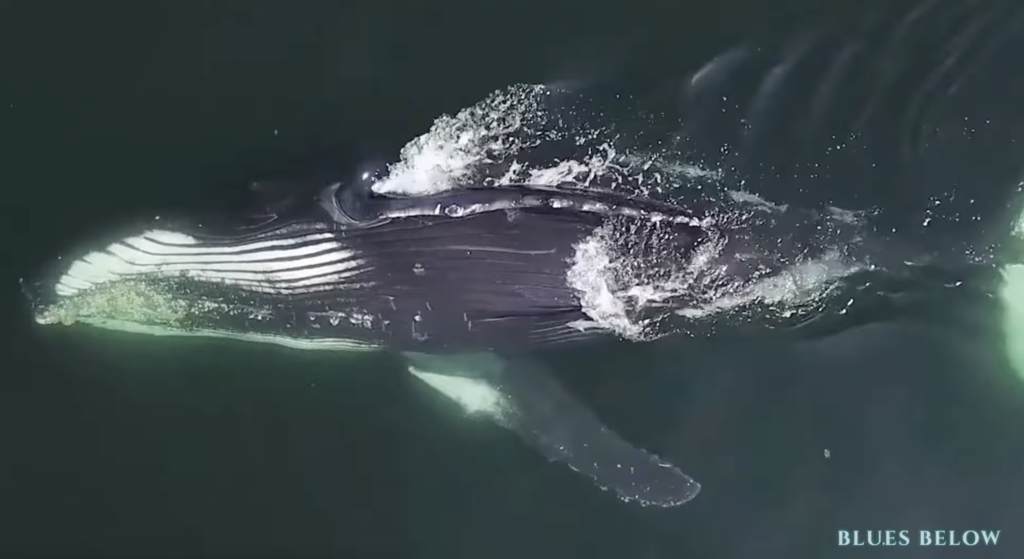
Humpback whales are among the species that undertake the longest migrations – up to 5,000 kilometres there and back. They do this to feed in cold waters, where prey is abundant, and to breed and raise their calves in warm waters. All populations of this species worldwide exhibit this extreme migratory behaviour — with one exception: a population living in the Arabian Sea off the southern coast of Oman (do watch the excellent 15-minute documentary [1]). As they live in one of the ocean regions with the strongest upwelling, they find sufficient food there whilst also enjoying the ideal temperature for their offspring. Consequently, they have never felt the need to migrate, and mitochondrial analyses show that they have not migrated in the last 70,000 years. Furthermore, they never change their songs, as their counterparts in all other regions do year after year, and they do not even adopt the songs of random intruders from another population. They appear to behave like a subspecies that does not interbreed with other populations – a cause for concern for conservationists, as the population in Oman has dwindled to around 80 individuals due to historical whaling and current threats by heavy shipping traffic and pollution from the war in the region.
What about other species?
What might this mean for other species that, in the wild, move across a considerable daily range and/or migrate, when they are restricted under farming conditions? Let’s take the example of the Atlantic salmon (Salmo salar), a commonly farmed species known for travelling several kilometres daily in its home river and migrating thousands of kilometres before returning home to spawn after a few years. Farmers would claim that in the wild, salmons swim about in search of food and oxygen; if both are provided for them, they simply no longer need to cover such distances. True?
The extraordinary example of Humpback whales off the coasts of Oman may suggest that other species, too, could give up swimming long distances if they found everything they need in one place – but that is by no means proving anything. And as long as there is no proof, the benefit of the doubt applies: roaming and migratory fish species cannot experience welfare under farming conditions.
[1] ’The Only Humpback Whales on Earth That Never Migrate’:
https://www.facebook.com/reel/1784207989577940
https://www.youtube.com/watch?v=8t4xKeWiw3g
Schreibe einen Kommentar
Du musst angemeldet sein, um einen Kommentar abzugeben.