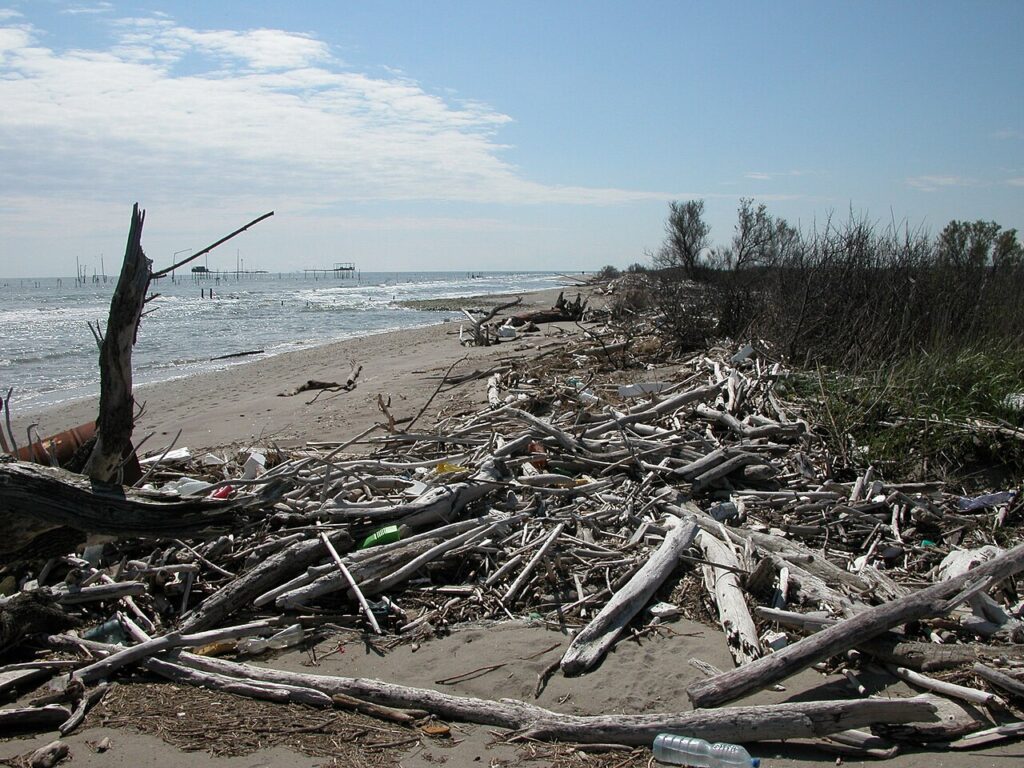
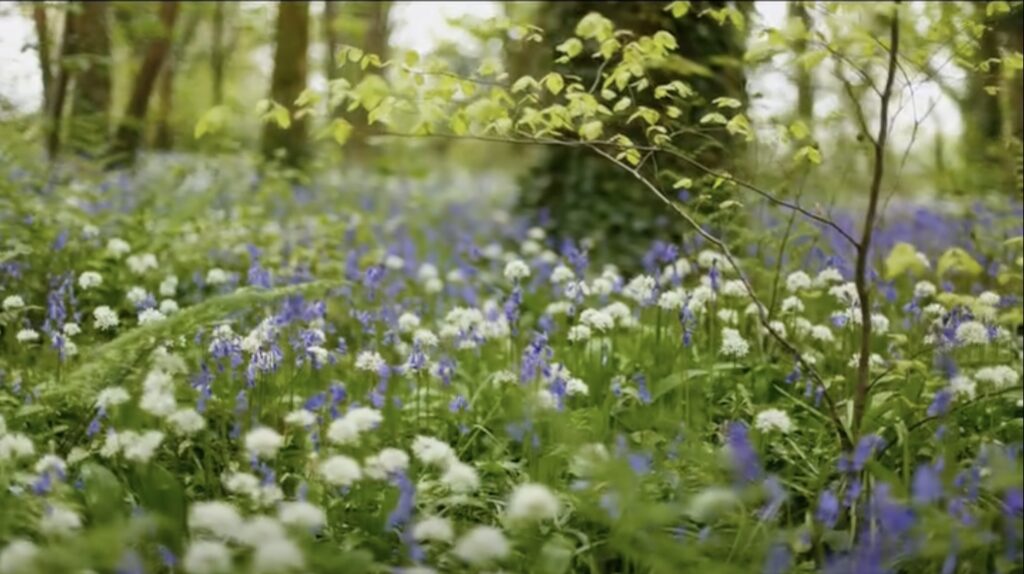
So ungepützelt sieht ein natürlicher Strand aus; spiaggia libera nördlich von Ravenna (Foto: Carlo Pelagalli)
Das grossenteils von Meer umgebene Italien hat 1700 km Strände, die alle dem Staat gehören. Nach dem Gesetz müsste die Hälfte davon frei zugänglich sein; tatsächlich sind in etlichen Regionen nur noch etwa ein 30 Prozent aller Strände «spiagge libere», in einigen sogar nur 10 Prozent, meist abgelegene und weniger beliebte Strandabschnitte. Was einst als Rente für Kriegsversehrte gedacht war, hat sich längst in eine paramafiöse Krake verwandelt, trotz jahrelangem Druck der EU auf Italien, die Strandkonzessionen periodisch öffentlich auszuschreiben.
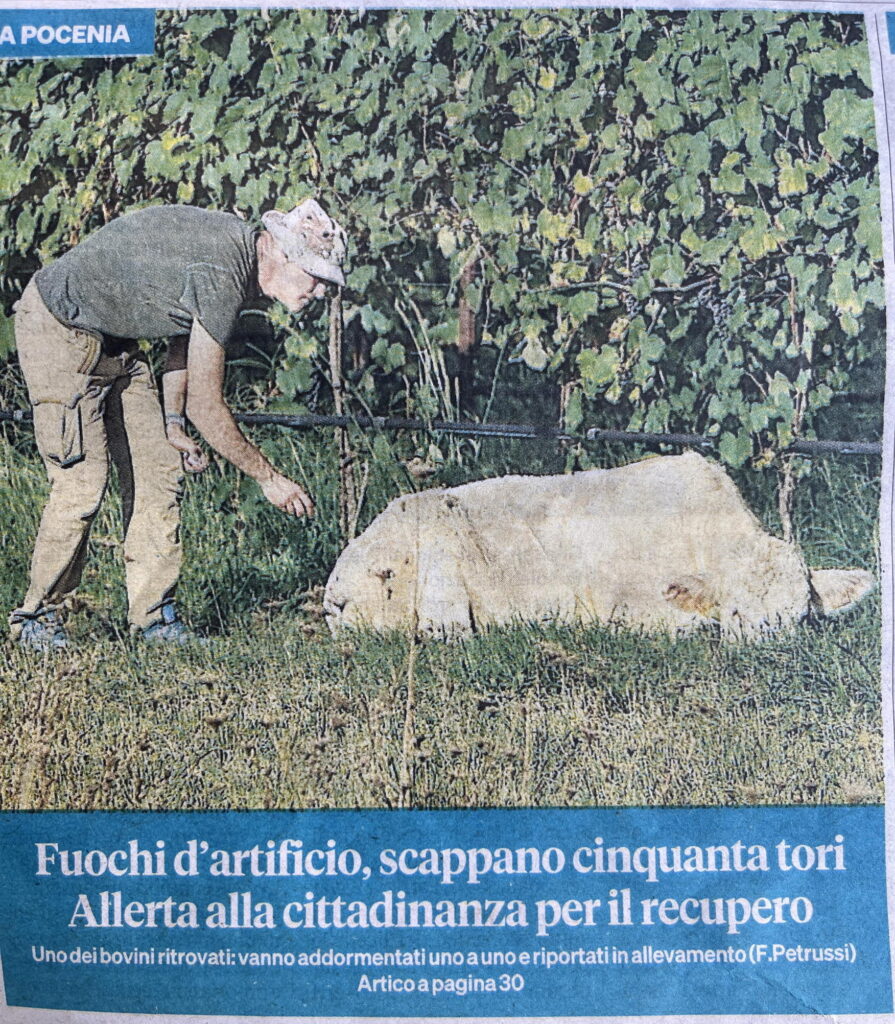
When farmed salmons have the chance to escape from their net pens, they inevitably do so, in their thousands. Even if they have been well fed and have never lived in the wild, they run away. It is in their nature.
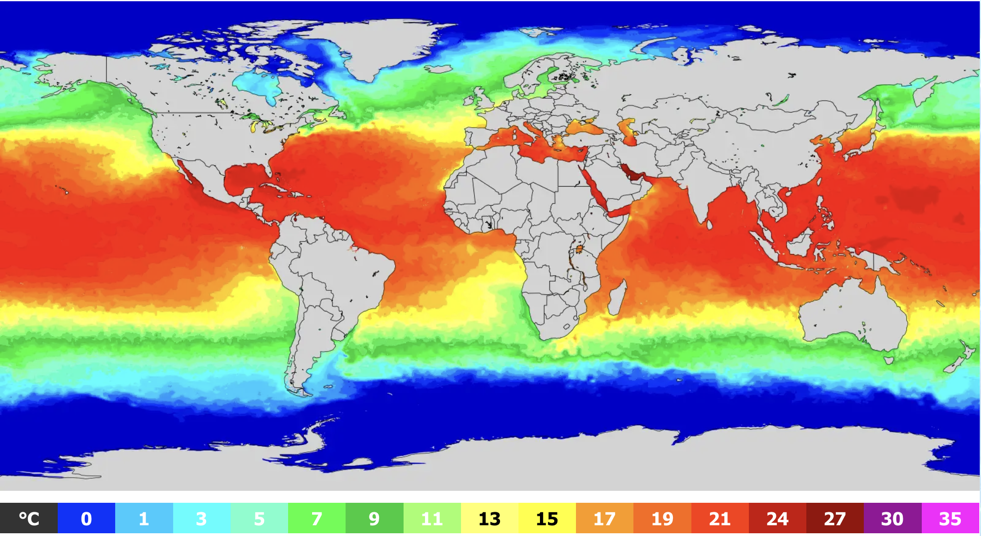
Meerestemperaturen am 30.08.2026, Farbskala in Grad Celsius (Grafik: seatemperature.org)
Im Sommer 2026 spiegelte die Umwelt mehr als je das Fehlverhalten der Menschheit. Der «Klimawandel», der richtiger als Erderwärmung bezeichnet werden muss (das Klima verändert sich ja weitgehend nicht aus eigenem Antrieb) wird meist als Grund genannt. Weniger Beachtung findet die falsche oder fehlende Bewirtschaftung unseres Lebensraums.
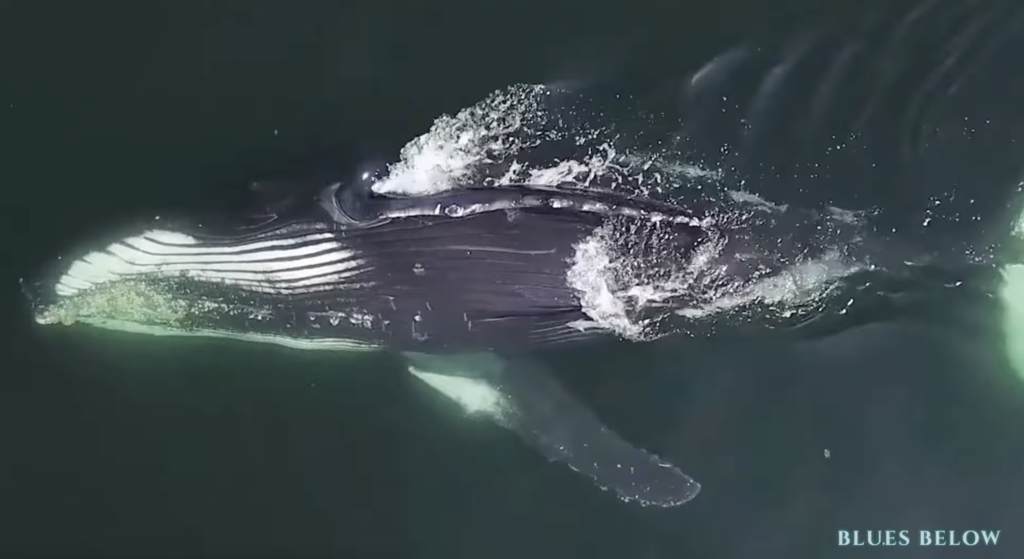
One of the debates in aquaculture that remains unresolved is the question of whether species which, by nature, roam several kilometres a day, or migrate ever greater distances between seasons, have an intrinsic need to do so, or whether they simply do this in order to find food and species-appropriate conditions such as temperature, oxygen, substrate, etc. If the latter is true, do they feel well when farmed within a limited area, provided they are supplied with food and the appropriate conditions? To find this out, one would have to conduct choice experiments in very large tanks offering different conditions – which would involve unprecedented costs and has therefore never been carried out. A tiny population of humpback whales, threatened with extinction, might – or might not – provide a small clue.
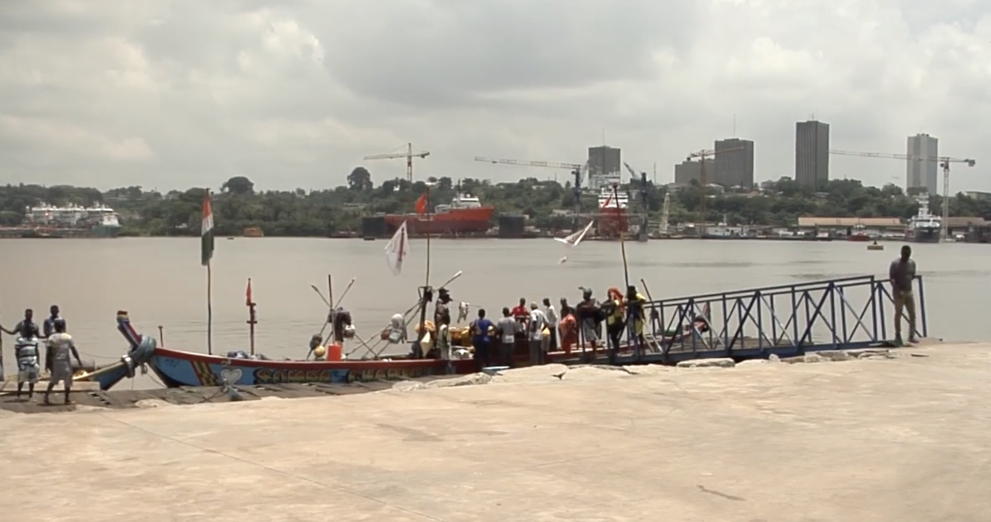
Fischerszene Elfenbeinküste /Screenshot aus dem Film [1])
Wie bringt man ökologische Massnahmen, langfristige Interessen von Fischern und die existentielle Abhängigkeit von täglichen Einkünften in Einklang? Ein paar kritische Überlegungen am Beispiel der Elfenbeinküste.
In der westafrikanischen Republik Elfenbeinküste fangen die Fischer immer weniger; der gesamte Fangertrag ging in den Jahren 2016 bis 2022 um fast die Hälfte zurück. Das Land, weltgrösster Kakaoproduzent (Erdölexporte bringen mittlerweile mehr Devisen), ist daher gezwungen, immer mehr Fisch für die Eigenversorgung zu importieren. Seit 2023 verordnet die Regierung eine Schonzeit während der Laichperiode, verbunden mit dem Fangverbot während zwei Monaten. [1]
Ökologisch wichtig, ökonomisch unvorbereitet
Aus ökologischer und ökonomischer Sicht ist das eine richtige Massnahme, weil sie den übernutzten Fischbeständen hilft, sich wieder zu erholen, was langfristig wieder zu grösseren Erträgen führt. Ausgeklammert blieb beim Beschluss der Regierung, wovon denn die Fischer und ihre Familien während der Schonzeit leben sollen; eine Entschädigung vom Staat erhalten sie jedenfalls nicht.
Küstendörfer im Weltsüden sind typischerweise ganz von der Fischerei abhängig, genauer: vom täglichen Fang. An den gefangenen Fischen verdienen die Männer, wenn sie mit ihren Booten zum Strand zurückkehren, und die Frauen, die die Fische verarbeiten und verkaufen. Fällt der Fang während mehrere Tage aus, wird es im Dorf ökonomisch bereits eng. Dann ist die übliche Klage in diesen Fischerdörfern zu hören: Wir haben kein anderes Einkommen als die Fische!
Überfischung hausgemacht
Schonzeiten sind ein erprobtes Mittel zur Bestandeserhaltung; sie setzen aber voraus, dass die Ursachen der Überfischung behoben werden. Für den Rückgang der Fischbestände werden gerne grosse Fangschiffe aus Europa und Asien verantwortlich gemacht. Im wesentlichen aber ist die Überfischung hausgemacht: Erstens dadurch, dass die Landesregierung Fangrechte an die ausländische Fangindustrie verkauft (oft viel zu günstig). Zweitens, weil diese Einnahmen kaum in die Überwachung der Fischerei und Mittel gegen illegale Aktivitäten investiert werden (ganz zu schweigen davon, dass die inländischen Fischer auch nur einen Cent von den Zahlungen ihrer ausländischen Konkurrenten zu sehen bekämen). Und drittens durch das Verharren der Fischerdörfer in einem Wirtschaftsmodell, das deren Bewohner bei sinkenden Erträgen erst recht von Fisch abhängig macht.
Im Film [1] werden zwar Beispiele gezeigt, in denen Fischerkooperativen versuchen, die zweimonatige Durststrecke mit Einkommen aus anderen Beschäftigungen zu überbrücken: mit Gemüseanbau, Hühnermast, Fischzucht und anderes mehr. Dabei fällt mir auf, dass es sich um ausgesprochene temporäre Ersatzaktivitäten handelt. Vom Aufbau einer diversifizierten lokalen Wirtschaft ist nicht einmal in einem Nebensatz die Rede. Und so bleibt es bei der Klage «Wir können nur fischen» und bei der Abwanderung frustrierter junger Fischer, die in ihren Dörfern keine Chance hatten, etwas anderes zu erlernen als einen gefährlichen und zusehends brotlosen Beruf, den viele von ihnen gar nicht erlernen wollten, wie ich aus persönlichen Gesprächen im Senegal weiss.
Fehlende sozialökonomische Entwicklung
Es ist verständlich, dass die Menschen in Fischerdörfern eine Entschädigung vom Staat fordern, der ihnen während zweier Monate zu fischen verbietet. Nicht verstehen kann ich aber, dass Menschen, die in diesen Dörfern aufgewachsen sind und das Glück hatten, anderswo Ausbildung und Arbeit und Einfluss zu bekommen, nichts für eine diversifizierte Zukunft ihrer Dörfer unternehmen – fast so, als wäre es ein unabdingbares Recht und eine unablegbare Pflicht, als Fischer geboren zu werden und zu sterben…
Nicht nur sozialökonomisch, sondern auch ökologisch wäre es sinnvoll, wenn in Fischerdörfern viele verschiedene Einkommensmöglichkeiten entstehen: abnehmende wirtschaftliche Abhängigkeit vom Fischfang verringert den Druck auf die Fischbestände und hebt zugleich die Fischpreise, was den Zwang, täglich fischen zu gehen, noch einmal verringert.
Wo sind Entwicklungsprojekte, die einen derartigen Ansatz in Fischerdörfern verfolgen? Ich habe bis heute von keinem gehört.
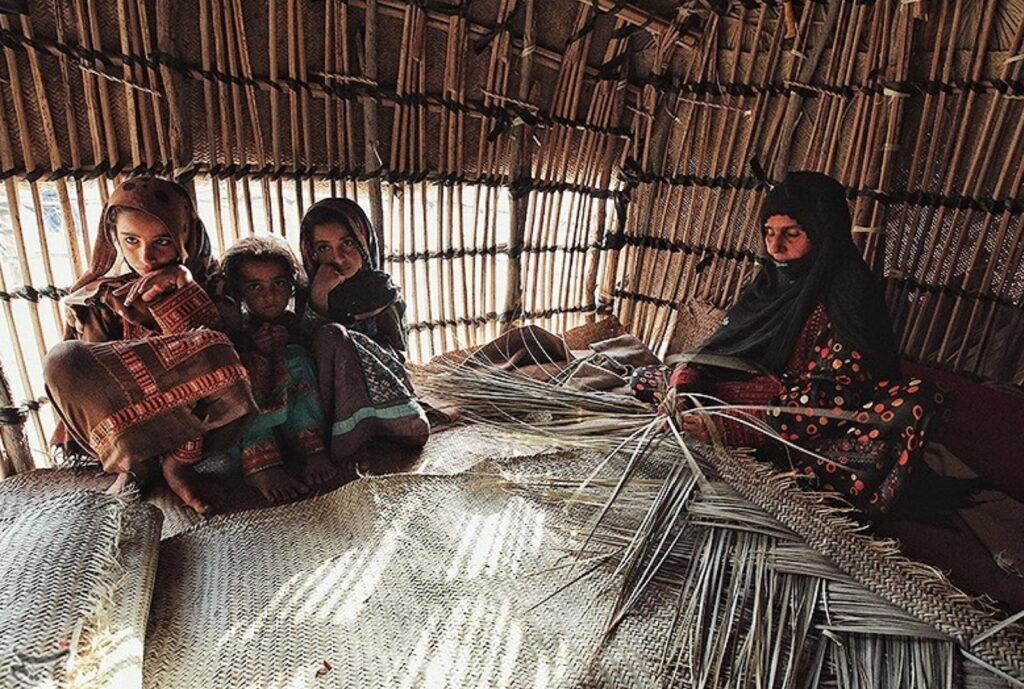
Traditional family in Jask port (credit: Mostafa Hassanzadeh / Wikimedia Commons)
On the second night of the war against Iran, on March 1, 2026, air strikes carried out by Israel and the USA thoroughly hit fishing harbours on the Iranian coast of the Gulf of Oman. More than 100 fishing boats and the livelihoods of tens of thousands of people were destroyed at once.
Human civilisation has exploited the planet to such an extent that life is under threat — including our own survival. There is still a way out of this catastrophe if we recognise what has gone wrong and act accordingly.
Humanity uses 1.3 billion acres for intensive agriculture, whilst 2 billion hectares have already been abandoned due to overuse and depletion. The planet’s plant biomass has decreased by 50%. To date, 73% of all species are in decline. 10,000 years ago, 95% of animal biomass consisted of wild animals, whereas today 95% of animal biomass consists of humans and their domesticated species, i.e. mainly farm animals. The biomass of marine fish has decreased by 60 to 80%, mainly over the last 100 years. The planet has lost around 50% of its productive capacity.
However, if we let cover large parts of land with trees and shrubs, we could significantly boost photosynthesis, create more life, reduce water consumption for plant care, and gain more shade, greater biodiversity, and a landscape that protects us from the extremes to which we are exposed as a result of man-made global warming.
Summary of a speech by Brett KenCairn [1] Founding Director of the Center of Regenerative Solutions