
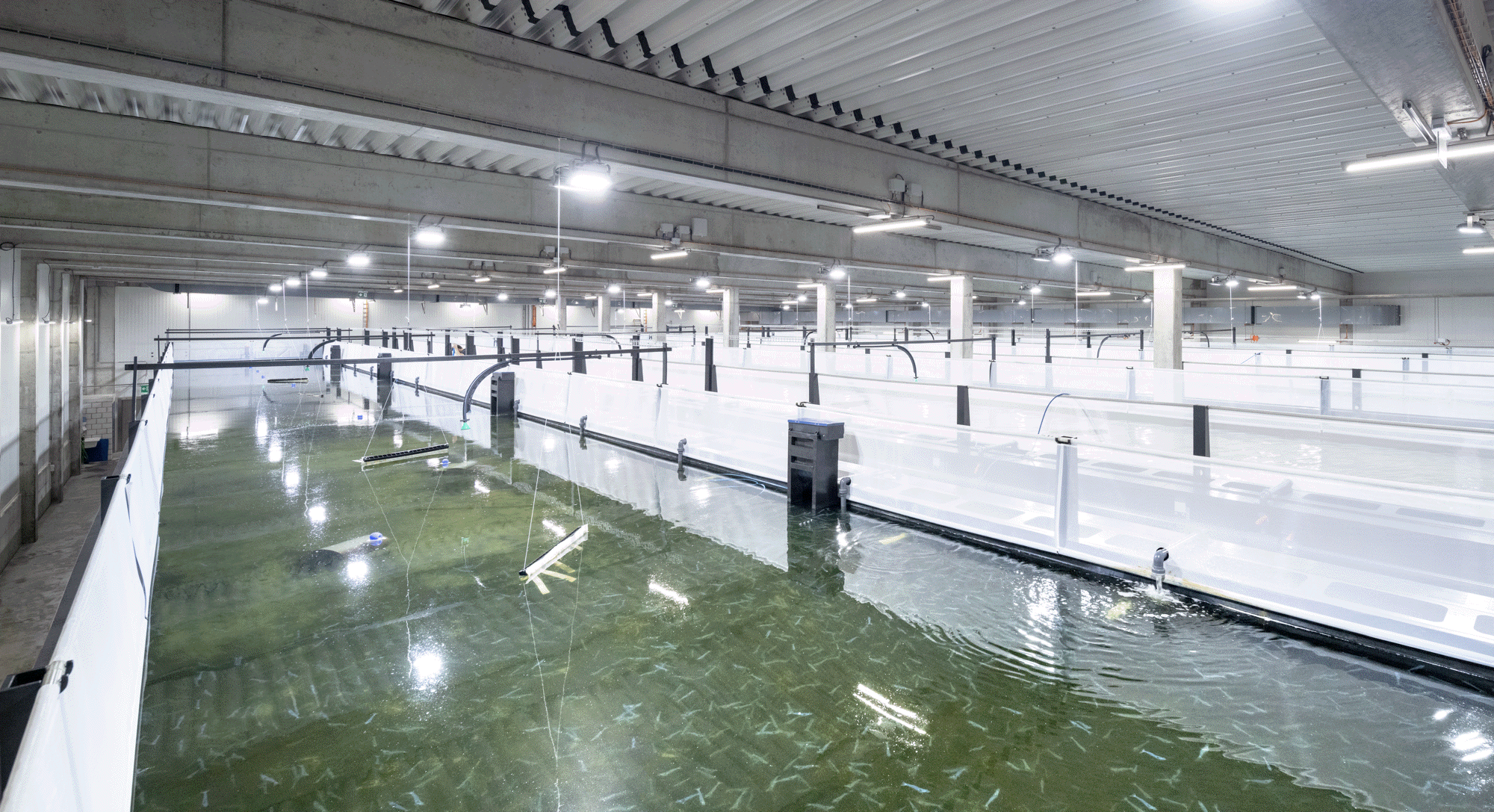
Hightech-Aquakultur im geschlossenen Wasserkreislauf (RAS, recirculation aquaculture system) erfordert nicht nur viel Kapital zur Erstellung der Anlage, sondern verursacht auch happige laufende Kosten für hochqualifiziertes Personal und Energie (Wärme, Pumpen, Filter); gering sind nur die Wasserkosten. Schon mancher RAS-Betrieb sah sich deswegen schon zum Aufgeben gezwungen.
(mehr …)Schlagwort: shrimps
-
Suche:
Übersetzen · Translate
Alle Themen · All topics:
Stichwortliste · Keyword list
animal suffering Animal welfare artisanal fisheries ASC Badetourismus Betäubung Blauhai bottom trawl bycatch Canada Carefish/catch Catch Welfare Plattform certification Chile China Cod consumer attitudes Danio rerio Don Staniford Erderwärmung EU evolution fair-fish fair-fish database Fischfutter Fischkonsum Fischmehl Fischwohl Fischzucht fish consumption FishEthoGroup fishing ban fish meal fish oil Fish stocks Fish welfare global warming Greenpeace greenwashing Grossbritannien Hummer Humpback whale ICSF India Intelligenz Kleinfischerei Kognition krill Label labels Lachs Lachszucht Litopenaeus vannamei local communities Marine Protected Areas (MPA) max. 1x im Monat Melander microalgae migration Mittelmeer MSC Norway Oktopoden Oman Omega-3 Ostsee Pacific whiteleg shrimp phytoplankton play Pole and line Rainer Froese RAS Ray Hilborn Reducing animal suffering Salmon Sandtigerhai Schweiz Scotland Senegal shrimps small-scale fisheries small scale fisheries stocking density Strand Strandschutz Swiss Shrimp Tierleid Tierschutz Tintenfische Tourismus trawler Tötung USA Wal Westafrika whales Whale shark whale song Überfischung ökologische Nische
Artikelarchiv · Articles by date
- Oktober 2026
- September 2026
- August 2026
- Juli 2026
- Juni 2026
- Mai 2026
- April 2026
- März 2026
- Februar 2026
- Januar 2026
- Dezember 2025
- November 2025
- Oktober 2025
- September 2025
- August 2025
- Juli 2025
- Juni 2025
- März 2025
- Februar 2025
- Januar 2025
- Dezember 2024
- Juli 2024
- Juni 2024
- April 2024
- März 2024
- Februar 2024
- Dezember 2023
- November 2023
- Oktober 2023
- September 2023
- August 2023
- Juli 2023
- Januar 2023
- Oktober 2022
- September 2021
- Dezember 2019
- Dezember 2018
- August 2017
- November 2016
- Januar 2016
- Februar 2015
- Juni 2014
- Februar 2014
- Dezember 2013
- Januar 2013
- Mai 2012
- Dezember 2011
- März 2011
- Februar 2011
-
Around 250 billion animals killed per year, many of which as appetisers
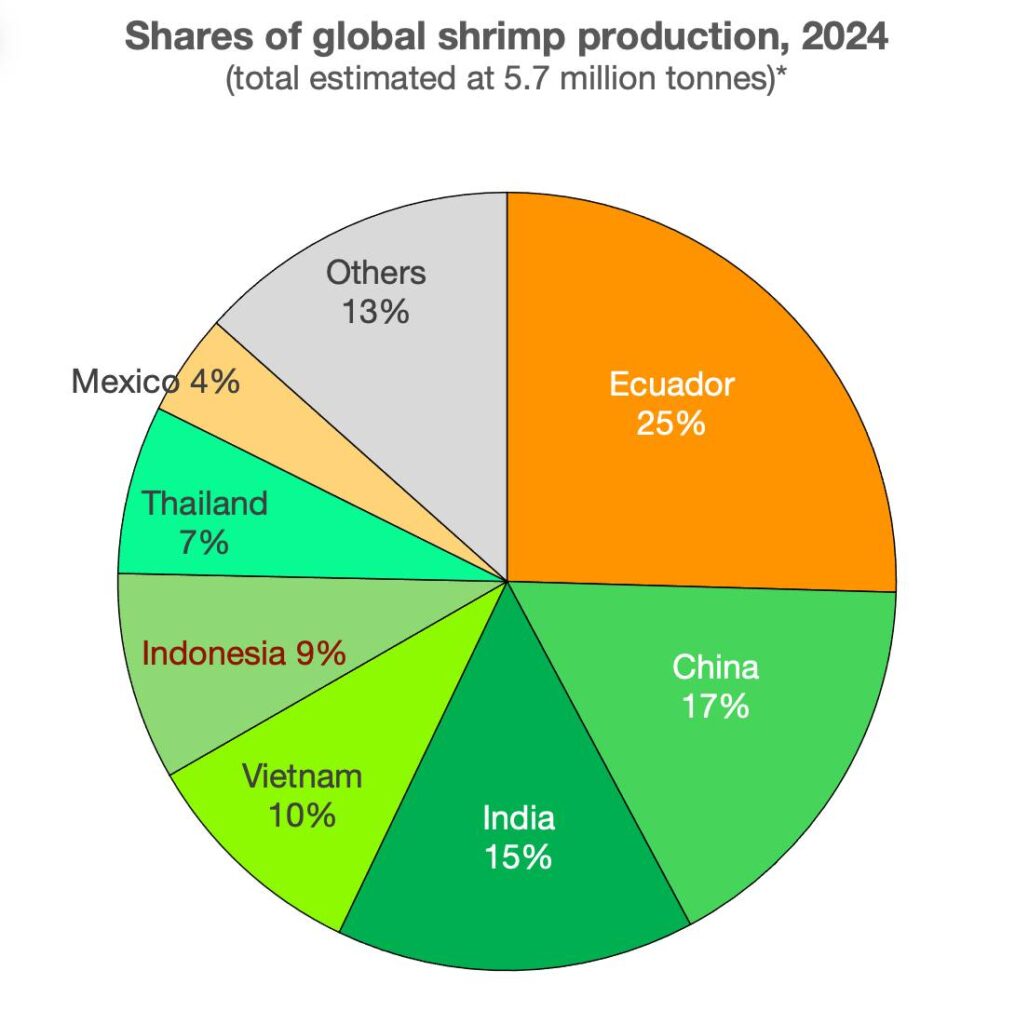
* Based on data from [1] and Shujie Chen et al., IFFO, Björn Kok et al., and A. G. J. Tacon et al. Annual global shrimp production was 5.6 million tonnes in 2023 and is estimated to reach 5.7 million tonnes in 2024 [1]. Assuming an average live weight per shrimp of 20 grams [2], this means that around 250,000,000,000 shrimp were killed last year. That’s about twice as many as the number of fish farmed each year!
Why is mankind farming one of the smallest of all farmed animals, and in exorbitant quantities? Wouldn’t it be wiser, if at all, to farm large aquatic animals such as the Arapaima, a Brazilian freshwater fish? This would at least significantly reduce the number of animals suffering.
Amazingly, Ecuador is the leading shrimp-producing country, with an area similar to that of the United Kingdom, but only 18 million inhabitants, half of whom live in the coastal region, where one in five workers is employed in the shrimp industry. 25 per cent of the world’s shrimps by weight come from this Latin American country, while China and India, 37 and 13 times larger than Ecuador respectively, each with almost 80 times the population, follow in second and third place only. In addition, more than half of the world’s shrimp weight is produced in Asia, the world’s leading region for aquaculture in general.
Reference and footnote:
[1] https://www.facebook.com/photo?fbid=28830292729891376&set=a.762088143805211
[2] varies from species to species and depends on age at harvest
Suche:
Übersetzen · Translate
Alle Themen · All topics:
Stichwortliste · Keyword list
animal suffering Animal welfare artisanal fisheries ASC Badetourismus Betäubung Blauhai bottom trawl bycatch Canada Carefish/catch Catch Welfare Plattform certification Chile China Cod consumer attitudes Danio rerio Don Staniford Erderwärmung EU evolution fair-fish fair-fish database Fischfutter Fischkonsum Fischmehl Fischwohl Fischzucht fish consumption FishEthoGroup fishing ban fish meal fish oil Fish stocks Fish welfare global warming Greenpeace greenwashing Grossbritannien Hummer Humpback whale ICSF India Intelligenz Kleinfischerei Kognition krill Label labels Lachs Lachszucht Litopenaeus vannamei local communities Marine Protected Areas (MPA) max. 1x im Monat Melander microalgae migration Mittelmeer MSC Norway Oktopoden Oman Omega-3 Ostsee Pacific whiteleg shrimp phytoplankton play Pole and line Rainer Froese RAS Ray Hilborn Reducing animal suffering Salmon Sandtigerhai Schweiz Scotland Senegal shrimps small-scale fisheries small scale fisheries stocking density Strand Strandschutz Swiss Shrimp Tierleid Tierschutz Tintenfische Tourismus trawler Tötung USA Wal Westafrika whales Whale shark whale song Überfischung ökologische Nische
Artikelarchiv · Articles by date
- Oktober 2026
- September 2026
- August 2026
- Juli 2026
- Juni 2026
- Mai 2026
- April 2026
- März 2026
- Februar 2026
- Januar 2026
- Dezember 2025
- November 2025
- Oktober 2025
- September 2025
- August 2025
- Juli 2025
- Juni 2025
- März 2025
- Februar 2025
- Januar 2025
- Dezember 2024
- Juli 2024
- Juni 2024
- April 2024
- März 2024
- Februar 2024
- Dezember 2023
- November 2023
- Oktober 2023
- September 2023
- August 2023
- Juli 2023
- Januar 2023
- Oktober 2022
- September 2021
- Dezember 2019
- Dezember 2018
- August 2017
- November 2016
- Januar 2016
- Februar 2015
- Juni 2014
- Februar 2014
- Dezember 2013
- Januar 2013
- Mai 2012
- Dezember 2011
- März 2011
- Februar 2011