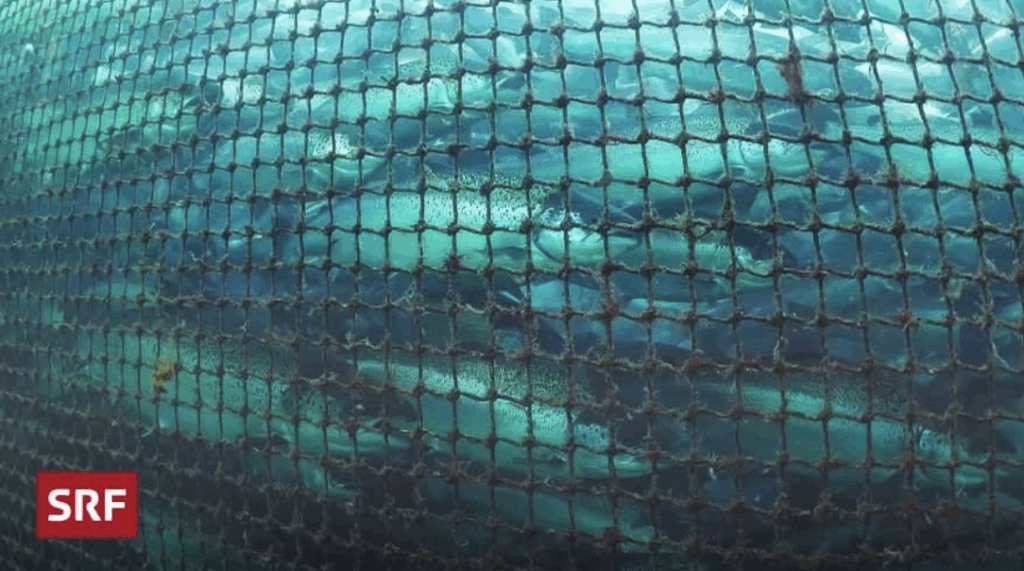
Gut gemachte, klare Sendung [1] von «Kassensturz», dank einem prima vorbereiteten Journalisten (Philipp Ruch) sowie Yannick Rohrer von fair-fish und Iris Menn von Greenpeace.
(mehr …)animal suffering Animal welfare artisanal fisheries ASC Badetourismus Betäubung Blauhai bottom trawl bycatch Canada Carefish/catch Catch Welfare Plattform certification Chile China Cod consumer attitudes Danio rerio Don Staniford Erderwärmung EU evolution fair-fish fair-fish database Fischfutter Fischkonsum Fischmehl Fischwohl Fischzucht fish consumption FishEthoGroup fishing ban fish meal fish oil Fish stocks Fish welfare global warming Greenpeace greenwashing Grossbritannien Hummer Humpback whale ICSF India Intelligenz Kleinfischerei Kognition krill Label labels Lachs Lachszucht Litopenaeus vannamei local communities Marine Protected Areas (MPA) max. 1x im Monat Melander microalgae migration Mittelmeer MSC Norway Oktopoden Oman Omega-3 Ostsee Pacific whiteleg shrimp phytoplankton play Pole and line Rainer Froese RAS Ray Hilborn Reducing animal suffering Salmon Sandtigerhai Schweiz Scotland Senegal shrimps small-scale fisheries small scale fisheries stocking density Strand Strandschutz Swiss Shrimp Tierleid Tierschutz Tintenfische Tourismus trawler Tötung USA Wal Westafrika whales Whale shark whale song Überfischung ökologische Nische
animal suffering Animal welfare artisanal fisheries ASC Badetourismus Betäubung Blauhai bottom trawl bycatch Canada Carefish/catch Catch Welfare Plattform certification Chile China Cod consumer attitudes Danio rerio Don Staniford Erderwärmung EU evolution fair-fish fair-fish database Fischfutter Fischkonsum Fischmehl Fischwohl Fischzucht fish consumption FishEthoGroup fishing ban fish meal fish oil Fish stocks Fish welfare global warming Greenpeace greenwashing Grossbritannien Hummer Humpback whale ICSF India Intelligenz Kleinfischerei Kognition krill Label labels Lachs Lachszucht Litopenaeus vannamei local communities Marine Protected Areas (MPA) max. 1x im Monat Melander microalgae migration Mittelmeer MSC Norway Oktopoden Oman Omega-3 Ostsee Pacific whiteleg shrimp phytoplankton play Pole and line Rainer Froese RAS Ray Hilborn Reducing animal suffering Salmon Sandtigerhai Schweiz Scotland Senegal shrimps small-scale fisheries small scale fisheries stocking density Strand Strandschutz Swiss Shrimp Tierleid Tierschutz Tintenfische Tourismus trawler Tötung USA Wal Westafrika whales Whale shark whale song Überfischung ökologische Nische
animal suffering Animal welfare artisanal fisheries ASC Badetourismus Betäubung Blauhai bottom trawl bycatch Canada Carefish/catch Catch Welfare Plattform certification Chile China Cod consumer attitudes Danio rerio Don Staniford Erderwärmung EU evolution fair-fish fair-fish database Fischfutter Fischkonsum Fischmehl Fischwohl Fischzucht fish consumption FishEthoGroup fishing ban fish meal fish oil Fish stocks Fish welfare global warming Greenpeace greenwashing Grossbritannien Hummer Humpback whale ICSF India Intelligenz Kleinfischerei Kognition krill Label labels Lachs Lachszucht Litopenaeus vannamei local communities Marine Protected Areas (MPA) max. 1x im Monat Melander microalgae migration Mittelmeer MSC Norway Oktopoden Oman Omega-3 Ostsee Pacific whiteleg shrimp phytoplankton play Pole and line Rainer Froese RAS Ray Hilborn Reducing animal suffering Salmon Sandtigerhai Schweiz Scotland Senegal shrimps small-scale fisheries small scale fisheries stocking density Strand Strandschutz Swiss Shrimp Tierleid Tierschutz Tintenfische Tourismus trawler Tötung USA Wal Westafrika whales Whale shark whale song Überfischung ökologische Nische
We know so little about life in the oceans. We find that a Humpback whale (Megaptera novaeangliae) did travel from the west coast of Latin America to the east coast of Africa, i.e. more than 13,000 kilometer, an extraoridnary long migration for an individual of this species, scientists say and puzzle over what could have caused this whale to go that far — mental confusion? desperately looking for a mating partner? However, we should also envisage that this individual behaviour is not so exceptional. The long-distance swimmer has been detected thanks to a new fluke recognition software, so, more long-distant travelling conspecifics could be detected in future.
More…
We know so little about life in the deep sea and what will happen when the industry starts digging there. Just one example: The Sea of Cortez between the Baja California peninsula and the Mexican mainland is one of the few hotspots for whale sharks known to migrate in the Pacific and also dive in the zone around Clarion-Clipperton Island, a key area for deep-sea mining in the Pacific. Whatever happens there will have its consequences in the Sea of Cortez, 2000 kilometres to the north, where global warming is threatening marine life and posing challenges not only to the whale sharks but also to local fishermen and people who live from tourism. This is one example of why the organisation ‘The Ocean and Us’ has launched its petition ‚to call on all governments to take a firm position against deep-sea mining‘.
More…
animal suffering Animal welfare artisanal fisheries ASC Badetourismus Betäubung Blauhai bottom trawl bycatch Canada Carefish/catch Catch Welfare Plattform certification Chile China Cod consumer attitudes Danio rerio Don Staniford Erderwärmung EU evolution fair-fish fair-fish database Fischfutter Fischkonsum Fischmehl Fischwohl Fischzucht fish consumption FishEthoGroup fishing ban fish meal fish oil Fish stocks Fish welfare global warming Greenpeace greenwashing Grossbritannien Hummer Humpback whale ICSF India Intelligenz Kleinfischerei Kognition krill Label labels Lachs Lachszucht Litopenaeus vannamei local communities Marine Protected Areas (MPA) max. 1x im Monat Melander microalgae migration Mittelmeer MSC Norway Oktopoden Oman Omega-3 Ostsee Pacific whiteleg shrimp phytoplankton play Pole and line Rainer Froese RAS Ray Hilborn Reducing animal suffering Salmon Sandtigerhai Schweiz Scotland Senegal shrimps small-scale fisheries small scale fisheries stocking density Strand Strandschutz Swiss Shrimp Tierleid Tierschutz Tintenfische Tourismus trawler Tötung USA Wal Westafrika whales Whale shark whale song Überfischung ökologische Nische
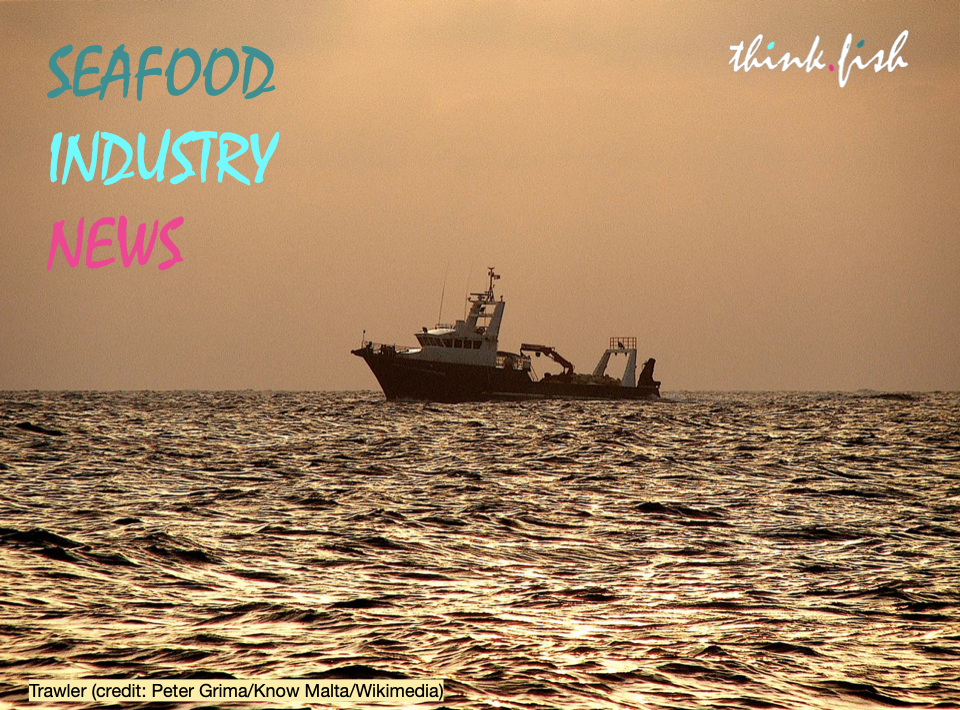
An outlook [1] from the UN Food and Agriculture Organisation (FAO) for 2024 predicts a slight increase in fisheries yields of 1.1%, while aquaculture is expected to grow by 3.1%, supported by a downward trend in fish meal and fish oil prices. On the other hand, the value of global trade in fish and seafood is expected to fall by 1.2%, although the volume will continue to increase by an estimated 1.0%.
(mehr …)animal suffering Animal welfare artisanal fisheries ASC Badetourismus Betäubung Blauhai bottom trawl bycatch Canada Carefish/catch Catch Welfare Plattform certification Chile China Cod consumer attitudes Danio rerio Don Staniford Erderwärmung EU evolution fair-fish fair-fish database Fischfutter Fischkonsum Fischmehl Fischwohl Fischzucht fish consumption FishEthoGroup fishing ban fish meal fish oil Fish stocks Fish welfare global warming Greenpeace greenwashing Grossbritannien Hummer Humpback whale ICSF India Intelligenz Kleinfischerei Kognition krill Label labels Lachs Lachszucht Litopenaeus vannamei local communities Marine Protected Areas (MPA) max. 1x im Monat Melander microalgae migration Mittelmeer MSC Norway Oktopoden Oman Omega-3 Ostsee Pacific whiteleg shrimp phytoplankton play Pole and line Rainer Froese RAS Ray Hilborn Reducing animal suffering Salmon Sandtigerhai Schweiz Scotland Senegal shrimps small-scale fisheries small scale fisheries stocking density Strand Strandschutz Swiss Shrimp Tierleid Tierschutz Tintenfische Tourismus trawler Tötung USA Wal Westafrika whales Whale shark whale song Überfischung ökologische Nische
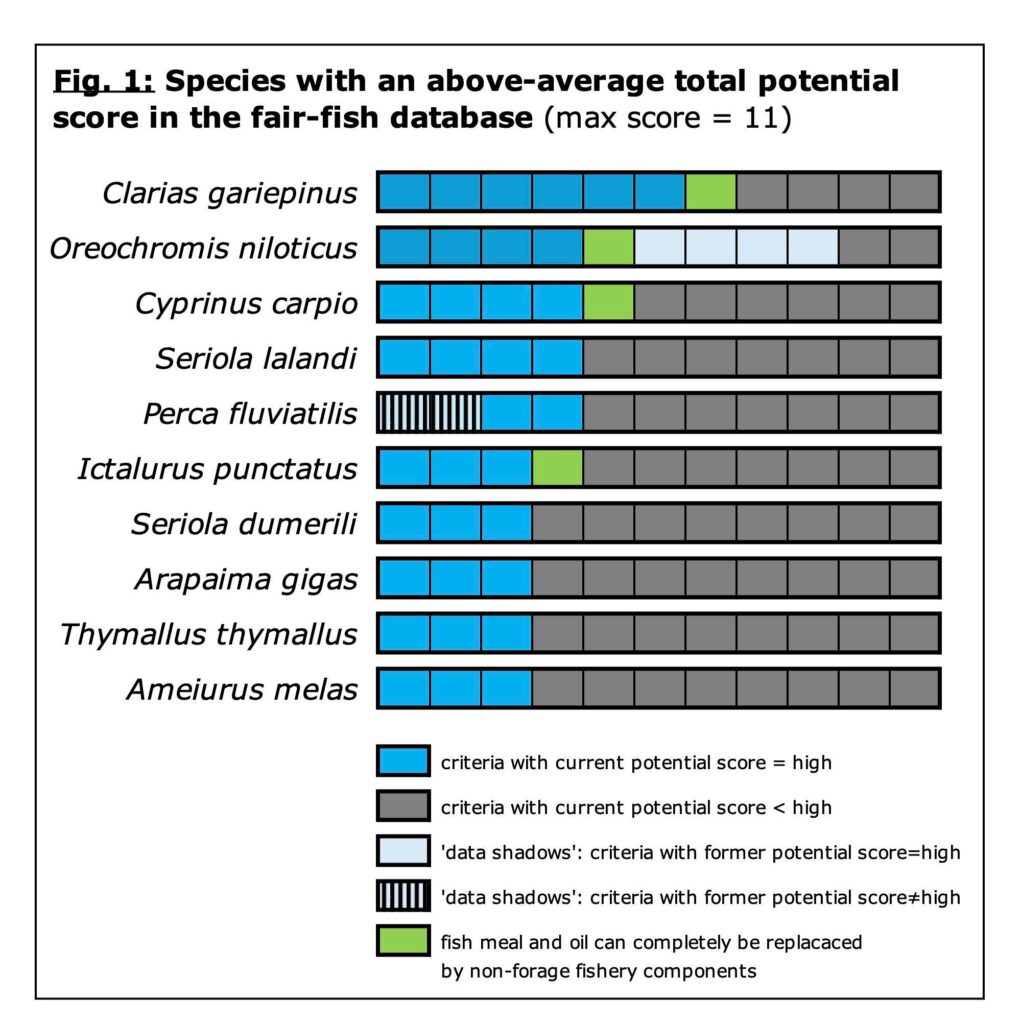
Resources are, as always, limited. Should we then invest in improving some details in the lives of over 500 farmed aquatic animal species, most of which are known not being able to experience welfare in captivity anyway? Or should we rather focus on the few species that possibly may thrive under improved farming conditions?
(mehr …)animal suffering Animal welfare artisanal fisheries ASC Badetourismus Betäubung Blauhai bottom trawl bycatch Canada Carefish/catch Catch Welfare Plattform certification Chile China Cod consumer attitudes Danio rerio Don Staniford Erderwärmung EU evolution fair-fish fair-fish database Fischfutter Fischkonsum Fischmehl Fischwohl Fischzucht fish consumption FishEthoGroup fishing ban fish meal fish oil Fish stocks Fish welfare global warming Greenpeace greenwashing Grossbritannien Hummer Humpback whale ICSF India Intelligenz Kleinfischerei Kognition krill Label labels Lachs Lachszucht Litopenaeus vannamei local communities Marine Protected Areas (MPA) max. 1x im Monat Melander microalgae migration Mittelmeer MSC Norway Oktopoden Oman Omega-3 Ostsee Pacific whiteleg shrimp phytoplankton play Pole and line Rainer Froese RAS Ray Hilborn Reducing animal suffering Salmon Sandtigerhai Schweiz Scotland Senegal shrimps small-scale fisheries small scale fisheries stocking density Strand Strandschutz Swiss Shrimp Tierleid Tierschutz Tintenfische Tourismus trawler Tötung USA Wal Westafrika whales Whale shark whale song Überfischung ökologische Nische
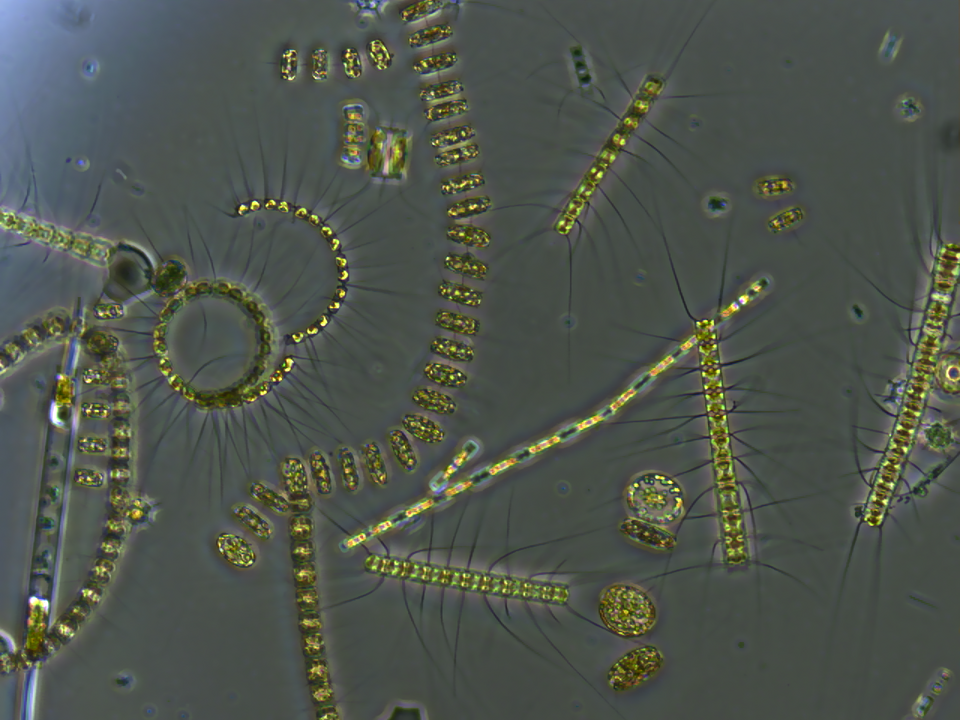
95% of the planet’s biomass is invisible to the naked eye, and most of it is plankton, very tiny plants (phytoplankton such as microalgae) and animals (zooplantkon such as copepods) that live in the water surface area. Microalgae not only form the base of the aquatic food web, but are also the most important origin of the air we breathe (half of the world’s oxygen is produced by microalgae) and of climate stability (half of the global carbon dioxide is absorbed by microalgae).
(mehr …)animal suffering Animal welfare artisanal fisheries ASC Badetourismus Betäubung Blauhai bottom trawl bycatch Canada Carefish/catch Catch Welfare Plattform certification Chile China Cod consumer attitudes Danio rerio Don Staniford Erderwärmung EU evolution fair-fish fair-fish database Fischfutter Fischkonsum Fischmehl Fischwohl Fischzucht fish consumption FishEthoGroup fishing ban fish meal fish oil Fish stocks Fish welfare global warming Greenpeace greenwashing Grossbritannien Hummer Humpback whale ICSF India Intelligenz Kleinfischerei Kognition krill Label labels Lachs Lachszucht Litopenaeus vannamei local communities Marine Protected Areas (MPA) max. 1x im Monat Melander microalgae migration Mittelmeer MSC Norway Oktopoden Oman Omega-3 Ostsee Pacific whiteleg shrimp phytoplankton play Pole and line Rainer Froese RAS Ray Hilborn Reducing animal suffering Salmon Sandtigerhai Schweiz Scotland Senegal shrimps small-scale fisheries small scale fisheries stocking density Strand Strandschutz Swiss Shrimp Tierleid Tierschutz Tintenfische Tourismus trawler Tötung USA Wal Westafrika whales Whale shark whale song Überfischung ökologische Nische
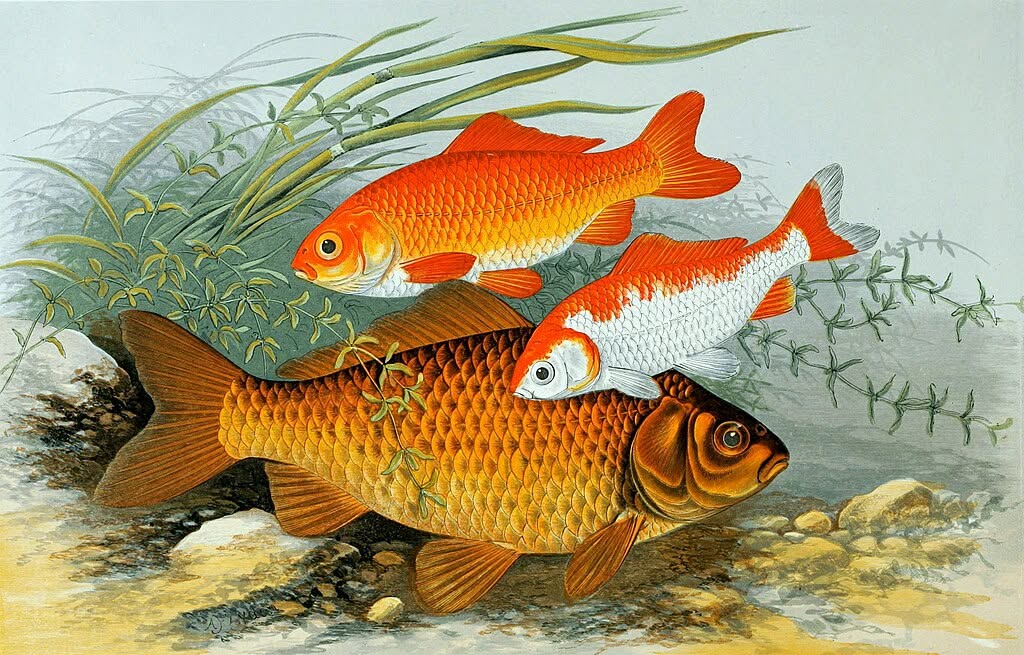
Humans and other animals with long-term memory tend to be addict to information — they grab at any information, whether it is useful or useless. Interestingly. Goldfishes don’t.
Goldfishes, too, are capable of remembering long passed experiences, but they are simply not interested in news that doesn’t make sense to them, as a recent study finds [1].
Why is that? The researchers put forward some hypotheses to be tested yet. Maybe goldfishes have a lower tolerance for frustration and therefore avoid to choose a situation which could turn our disappointing. Or they can deal better with uncertainty then we do and therefore do not need to know everything. The typical forage behaviour of a species could also play a role in its hunger for information. Interesting questions; the answers cloud also shed more light on our own behaviour in front of information.
I’d like to subscribe to the think.fish newsletter
Source:
[1] Do goldfish like to be informed? (Preprint)
First published on 25.06.2024 on Facebook
animal suffering Animal welfare artisanal fisheries ASC Badetourismus Betäubung Blauhai bottom trawl bycatch Canada Carefish/catch Catch Welfare Plattform certification Chile China Cod consumer attitudes Danio rerio Don Staniford Erderwärmung EU evolution fair-fish fair-fish database Fischfutter Fischkonsum Fischmehl Fischwohl Fischzucht fish consumption FishEthoGroup fishing ban fish meal fish oil Fish stocks Fish welfare global warming Greenpeace greenwashing Grossbritannien Hummer Humpback whale ICSF India Intelligenz Kleinfischerei Kognition krill Label labels Lachs Lachszucht Litopenaeus vannamei local communities Marine Protected Areas (MPA) max. 1x im Monat Melander microalgae migration Mittelmeer MSC Norway Oktopoden Oman Omega-3 Ostsee Pacific whiteleg shrimp phytoplankton play Pole and line Rainer Froese RAS Ray Hilborn Reducing animal suffering Salmon Sandtigerhai Schweiz Scotland Senegal shrimps small-scale fisheries small scale fisheries stocking density Strand Strandschutz Swiss Shrimp Tierleid Tierschutz Tintenfische Tourismus trawler Tötung USA Wal Westafrika whales Whale shark whale song Überfischung ökologische Nische
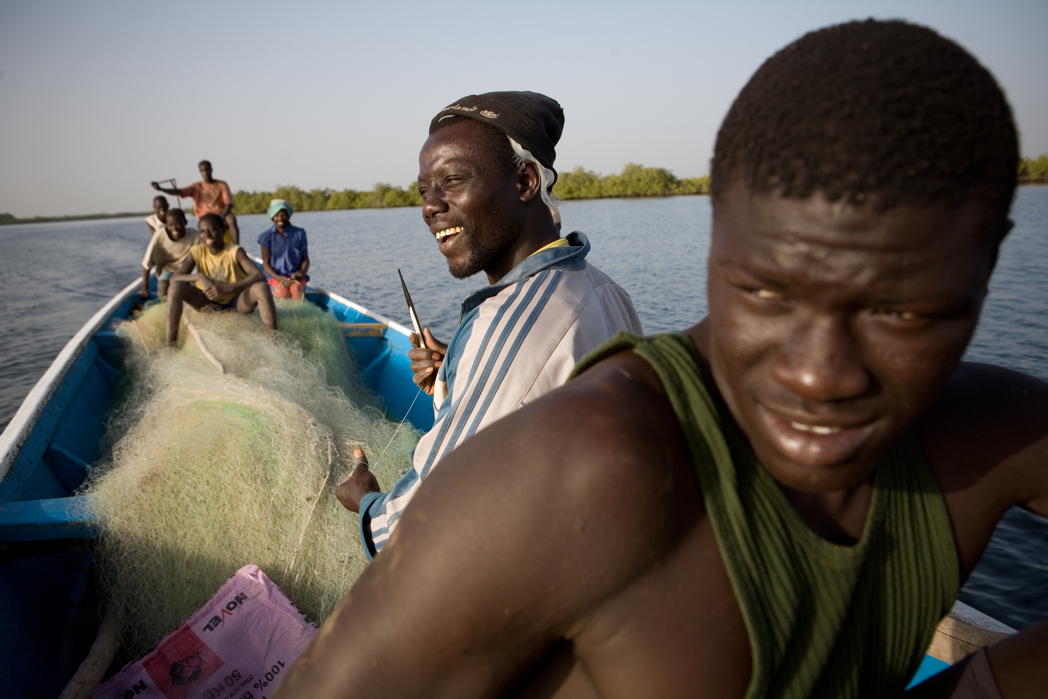
Artisanal fisheries provide 53% of the fish consumed worldwide, 90% of employment in fisheries, predominantly in the Global South, and 54% of all catch sale revenues (see graph below). They could provide even more if they were not harried by industrial fisheries. Instead, artisanal fisheries are disregarded.
Artisanal fisher(wo)men in the Global South complain about the frequent disregard of their human rights and demand that their traditional rights to access to water bodies, fishing grounds, landing and transformation sites, and to the market be recognised.
Fisherwomen in particular complain of discrimination and call for their crucial role in artisanal fisheries, families, and communities to be recognised.
Fishing communities complain of marginalisation and demand access to public infrastructure, social services, and development.
On top of these problems, artisanal fisheries on the shores of seas and lakes are among the first to be affected by global warming and therefore need support to overcome its negative impacts.
This is a short summary of workshops with artisanal fisher(wo)man held during the International Year of Artisanal Fisheries and Aquaculture in 2022, made available through a worth seeing video recently by ICSF [1].
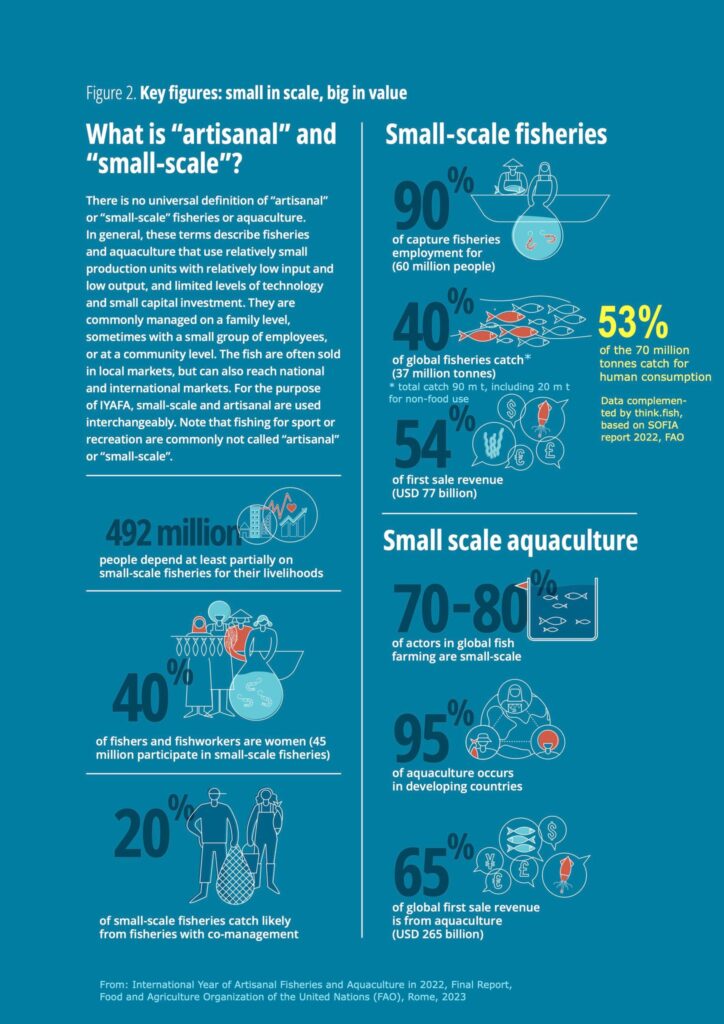
The personal summary of one of the ICSF workshop participants is especially interesting:
‚Maybe we have to look where we haven’t looked before, put ourselves in the skin of the fish.‚
Good point! Putting yourself in the skin of a fish — whether as a consumer, chef,retailer, fishmonger or a primary producer — would also mean to recognise also the rights of the fishes to be at least treated with respect and spared harm as much as possible. It is understandable that fishermen who struggle for their own survival do not pay much attention to the struggle of the animals. A key to substantially reducing animal suffering in fisheries is to improve the living conditions of artisanal fisher communities. The still unrivalled project of fair-fish and artisanal fisheries in Senegal in the noughties [2], which failed because the market was not ready yet, is still waiting for imitators.
Title picture:
Artisanal fishermen on the Saloum, Senegal (credit: Michael Hauri)
Sources:
[1] Video about the ICSF Workshops in the International Year of Artisanal Fisheries and Aquaculture (IYAFA, 2024). Thanks to the International Collective in Support of Fishworkers (ICSF) that organised the workshops reported by this video,
[2] see the in-depth chapter in the fair-fish book about the project in Senegal
animal suffering Animal welfare artisanal fisheries ASC Badetourismus Betäubung Blauhai bottom trawl bycatch Canada Carefish/catch Catch Welfare Plattform certification Chile China Cod consumer attitudes Danio rerio Don Staniford Erderwärmung EU evolution fair-fish fair-fish database Fischfutter Fischkonsum Fischmehl Fischwohl Fischzucht fish consumption FishEthoGroup fishing ban fish meal fish oil Fish stocks Fish welfare global warming Greenpeace greenwashing Grossbritannien Hummer Humpback whale ICSF India Intelligenz Kleinfischerei Kognition krill Label labels Lachs Lachszucht Litopenaeus vannamei local communities Marine Protected Areas (MPA) max. 1x im Monat Melander microalgae migration Mittelmeer MSC Norway Oktopoden Oman Omega-3 Ostsee Pacific whiteleg shrimp phytoplankton play Pole and line Rainer Froese RAS Ray Hilborn Reducing animal suffering Salmon Sandtigerhai Schweiz Scotland Senegal shrimps small-scale fisheries small scale fisheries stocking density Strand Strandschutz Swiss Shrimp Tierleid Tierschutz Tintenfische Tourismus trawler Tötung USA Wal Westafrika whales Whale shark whale song Überfischung ökologische Nische
Scottish activist Don Staniford had been forbidden to approach Scottish farming sites of Mowi, the world’s biggest salmon farming company; we reported on it in November 2023 [1]. To be able to continue his investigations on what really happens in industrial salmon farming, Staniford had appealed to the local court which recently followed Mowi’s claim that Staniford has no right to “board, enter onto, physically occupy, attach himself or vessels to all structures, docks, walkways, buildings, floats or pens of Mowi sites” or to “instruct others to act in his place”.
Staniford is not known to give in. Currently he is considering to appeal to the next instance.
More…
[1] What are salmon industry leaders trying to hide?
animal suffering Animal welfare artisanal fisheries ASC Badetourismus Betäubung Blauhai bottom trawl bycatch Canada Carefish/catch Catch Welfare Plattform certification Chile China Cod consumer attitudes Danio rerio Don Staniford Erderwärmung EU evolution fair-fish fair-fish database Fischfutter Fischkonsum Fischmehl Fischwohl Fischzucht fish consumption FishEthoGroup fishing ban fish meal fish oil Fish stocks Fish welfare global warming Greenpeace greenwashing Grossbritannien Hummer Humpback whale ICSF India Intelligenz Kleinfischerei Kognition krill Label labels Lachs Lachszucht Litopenaeus vannamei local communities Marine Protected Areas (MPA) max. 1x im Monat Melander microalgae migration Mittelmeer MSC Norway Oktopoden Oman Omega-3 Ostsee Pacific whiteleg shrimp phytoplankton play Pole and line Rainer Froese RAS Ray Hilborn Reducing animal suffering Salmon Sandtigerhai Schweiz Scotland Senegal shrimps small-scale fisheries small scale fisheries stocking density Strand Strandschutz Swiss Shrimp Tierleid Tierschutz Tintenfische Tourismus trawler Tötung USA Wal Westafrika whales Whale shark whale song Überfischung ökologische Nische