think.fish blog

  • Is fish welfare easier to achieve in fisheries than in aquaculture?

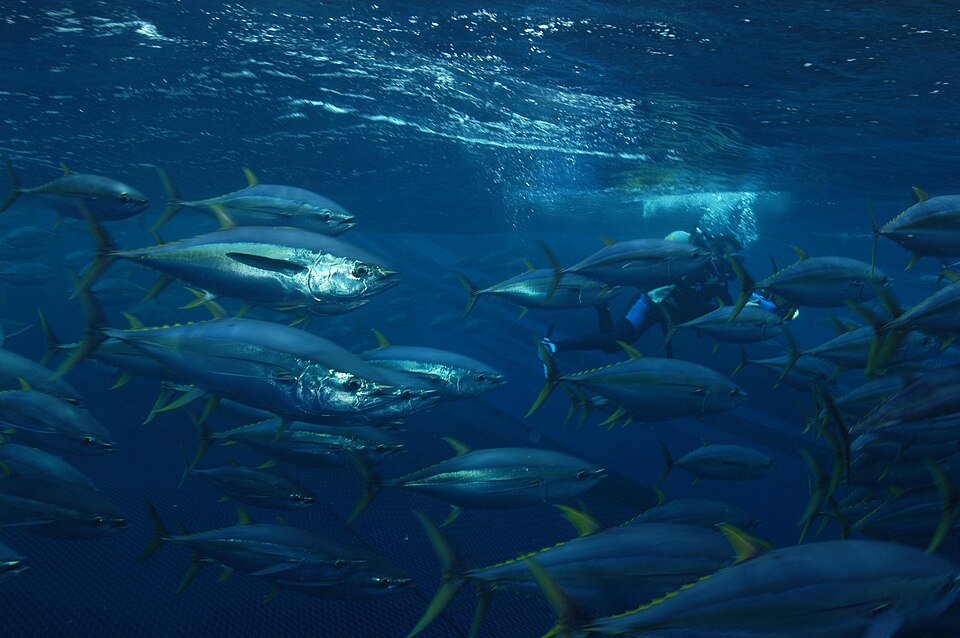
    Is fish welfare easier to achieve in fisheries than in aquaculture?

    Research has shown that it is impossible for almost all animal species to experience welfare in aquaculture [1]. Should we therefore focus on improving fish welfare in fisheries? It depends.

    The fishing gear and methods vary greatly, depending first of all on the intended catch and, secondly, on the target species.

    (mehr …)
  • Vor dem Sex Gehirn trainieren!

    Den satten industrialisierten Volkswirtschaften gehen schleichend die Menschen aus, die Anzahl der Geburten pro Jahr sinkt unter die Anzahl der Verstorbenen. Hat das vielleicht hat es mit einer Abnahme der durchschnittlichen Intelligenz zu tun?

    Eine Studie an Moskitofischen (Gambusia holbrooki) zeigt, dass kluge Männchen bessere Chancen haben, ein Weibchen anzulocken und zu begatten. Intelligenz wirkt offenbar nicht nur indirekt als Selektion, also dadurch, dass intelligentere Individuen rascher und mehr Futter finden und damit auch Vorteile bei der Paarung haben. Die Autoren der Studie vermuten eine direkte Wirkung: «Ein besseres Gehirn könnte einem Tier helfen, mehr Partner zu finden, mehr Sex zu haben und schliesslich mehr Babies zu bekommen.» Tests ergaben, «dass sich intelligentere Männchen mit mehr Weibchen paarten und mehr Nachkommen zeugten als weniger gescheite Fische».

    Also, Männer: trainiert euer Gehirn, nicht nur eure Fitness!

    Mehr dazu…


  • Ecologically responsible fishing without social responsibility?

    Screenshot from MSC’s website: the promised benefit may work for the owner of the trawler, but for the workers? Let alone artisanal fishermen…

    In an open letter, the Marine Stewardship Council (MSC) was recently accused of enabling labour rights violations in its certified fisheries.

    The authors of the letter [1] are members of the Seafood Working Group (SWG), a global coalition of human rights, labour, and environmental organisations, including Global Labor Justice (GLJ), a Washington-based NGO. The letter criticises ’systematic exploitation and hazardous conditions‘ and calls for ‚urgent reform of MCS’s social policies and certification processes‘.

    (mehr …)
  • Ocean life on Earth and elsewhere

    Ocean life on Earth and elsewhere

    Whales filter seawater to feed on krill, tiny zooplanktonic crustaceans. When the whales were decimated, it was assumed that the krill population would flourish, but in contrast, their population declined at the same time. A recent study by the University of Washington [1] found that whale excrement contains a significant amount of iron and non-toxic copper, both essential but scarce nutrients for phytoplankton, which in turn is the food source of krill. In other words, whales have always provided the basis for their own prey and that of many other marine animals. The critical role that whales play in the complex marine food web was jeopardised by industrial whaling.

    On other places in space, there could also be life in the oceans, but it would not be easy to detect . A study at the University of Reading [2] suggests that the physics of alien oceans could prevent deep-sea life from reaching the surface for us to see. In the case of a moon of Saturn, its ocean forms layers that are so distinct that they slow the upward movement of material from the seabed. The absence of tangible biological signatures on the surface does not therefore mean that there is no life in an alien deep sea. Whether this is good news for billionaires exploring extraterrestrial havens is another question; for those who remain on Earth and depend on healthy oceans, the international ban on whaling is a glimmer of hope and should be defended against the greed of some nations.

    PS: In Humpback whale songs, researches recently detected ‚the same statistical structure as human language‘. The assumption that language ability is reserved for Homo sapiens is obviously anthropocentric, professor Chomsky.


    Title picture:
    A Whale shark (Rhincodon typus) filter-feeding plankton at night (credit: Arturo de Frias Marques / Wikimedia Commons)

    References:

    [1] ‚Whale poop contains iron that may have helped fertilize past oceans‘, ScienceDaily, 06.02.2025

    [2] ‚Alien ocean could hide signs of life from spacecraft‘, ScienceDaily, 06.02.2025

    [3] ‚Humpback whale songs are structured like human language‘, Sience.org, 06.02.2025


  • Salmons à gogo…

    Salmons à gogo…

    #1 – Chile: ‘We can be proud of what this industry has built,’ says the CEO of the Chilean Salmon Council, pointing to a growth of 4,000 per cent since the early 1990s. However, he admits that ‘the initial growth was often unruly and unregulated, leading to environmental damage and culminating in an ISA virus crisis from 2007 to 2010’, after which ‘the public system worked together with the industry to be able to regulate it, and today, it has become an overregulation’. Hard to believe, though, because why else criticism environmental organisations still continues?
    More…

    #2 – Iceland: Trouble at the election of a new board member of Kaldvik, one of the leading salmon farming companies in Iceland. The designated candidate, the former CEO of the Norwegian Seafood Council, was opposed by an Icelandic property, investment and fisheries expert, who lost the election however.
    More…

    #3 – Norway: Salmon farming is blamed for the rapid decline of wild Atlantic salmon stocks. Now, the Norwegian Environment Agency appears to have found a reason in addition: illegal fishing with nets along the country’s coast, especially in the north. ‘If you fish in the sea on these weak populations, the consequences can be serious,’ said the agency’s spokesperson [3], thus indirectly admitting that there is a pre-existing cause. However, the root cause is the ever-increasing salmon frenzy in Western markets, more of the same, more of the same…
    More…

    #4 – Scotland: The salmon frenzy continues, and so does Don Staniford, unyielding. The anti-salmon farming campaigner has been judicially banned from approaching the farms of large companies such as Mowi and Scottish Sea Farms. Now he is protesting in front of the farms.
    More…


  • In defence of employed animals

    In defence of employed animals

    I always appreciate the sound and clear arguments of my colleague Lewis Bollard, who does important work as head of the farm animal welfare programme at Open Philanthropy (USA). Like him, I have always defended reputable certification schemes against radical criticism because they are, as Lewis puts it, ‘imperfect agents of change’, but change-oriented nonetheless, while industries that do not adopt certified policies simply continue in non-viable practices.

    However, as far as I am concerned, I am first and foremost in defense of the animals, and I know Lewis is too. For most of my life I have worked amidst the contradictions between ideal living conditions for employed animals and attempts to improve their conditions step by step. My strategic approach has been a kind of pragmatic radicalism, while my operational work has been closer to establishing standards and certification, bringing stakeholders together to set good examples and make them models to copy. Nevertheless, I was always critical of the big certification schemes promoted by large non-governmental organisations, retail chains, and the industry, because I felt that more should be achieved for the animals, the environment and the workers — or the propaganda of these labels should be kept less gradiloquent. My personal compromise was to work for small pioneer projects with a high standard philosophy, first 20 years in land animal husbandry, then 27 years in aquaculture and fisheries. The following comments are mainly based on my experience in the second area.

    The case of ‚fish welfare‘

    Getting old ment getting angry in my case. My view of what goes under the banner of ‘fish welfare’ has become increasingly critical, radical, even impatient. In aquaculture, over the last ten years, ‚fish welfare‘, which only thirty years ago has been deprecatingly regarded as a crazy idea by a few cranks, has become a common denominator in the advocacy, scientific, retail and industry. This is undoubtedly a nice success for the pioneers. However, in practice and from the point of view of the fishes, real progress is modest when measured against the basic meaning of the term ‘welfare’. And I have the impression that most of those involved are satisfied with the few improvements achieved so far.

    Do the fish really feel well under improved farming conditions? Thanks to research [3] by fair-fish international and FishEthoGroup, which was also generously supported by Open Philanthropy, we now know that the welfare potential of almost all farmed fish species is close to zero. They are not naturally able to experience welfare, i.e. to feel anywhere near as well as they do in the wild. They can’t, not even under the best possible farming conditions. It is obvious that we should stop investing research and money in farming species such as salmon, trout, sea bass, sea bream, halibut, turbot, sturgeon, and many others if we want to use the welfare claim for them. The real message for almost all products from aquaculture with improved living conditions would be: from fish that have suffered less.

    Even more pressing is the question in fisheries: do fish feel well under more respectful fishing methods? Certainly not, not in any conceivable case! At best, they are stunned and killed immediately after being hooked or netted — in stark contrast to common fishing practices, but still: would you feel well being killed? The literal mislabelling is obvious, and again, we should call it a fish that has suffered less, if a fishery’s efforts even merit that claim.

    A plea for a highest standard fish label

    Two conclusions can be drawn from the above.

    1) We could at least be honest enough to abandon the claim ‘animal welfare’ and instead talk about steps to minimise animal suffering.

    2) Or we put animal welfare first and renounce any practice that is not in line with it. This would not necessarily mean renouncing animal products and their slaughter, provided it is done in a way that we ourselves would accept: a good life and a good death.

    Certification schemes can pave the way for stricter rules that over time will bw followed by everyone in the industry. This is why they are a valid tool, as much as they may be criticised; as long as they learn from it and improve, progress can still be achieved across the industry in the long run. However, and especially in animal husbandry, certification schemes tend to prolong industrial practices that we should end as soon as possible for ethical and environmental reasons. The longer I have worked in this field, the more I have sided with the critics. In my experience, for all cases where animals are employed, we need certification systems that set the highest standards and can serve as a benchmark for all other schemes and policies, even when setting the example on a small market share only.

    To give an example: In Switzerland, there is a small organisation called KAGfreiland, founded in 1972, which sets the highest organic and free-range standards for farm animal husbandry in the world and has built a small market based on cooperation between certified farmers, consumers and shops [2]. The example of KAGfreiland has forced the larger organic organisations to adopt stricter guidelines for animal husbandry. Similarly, fair-fish has developed and applied the world’s most ambitious fisheries certification system as part of its project with artisanal fishers in Senegal [4]. After the project came to an end, certification activities were discontinued, but the standard continued to serve as a benchmark.

    I would like to encourage the pioneer stakeholders in fisheries and aquaculture to come together [5] and lead by examples in order to break their colleagues out of a certain complacency.


    Title picture:
    Drawing by Kasia Jackowska

    References:

    [1] Lewis Bollard: ‚In defence of the certifiers

    [2] fair-fish database , then filter by ‚Welfare Score‘, ‚Potential‘

    [3] https://kagfreiland.ch (the author has been its director, 1985-2001)

    [4] fair-fish guidelines for aquaculture and fisheries (the author was the founder and has been the director and president of fair-fish, 1997-2023)

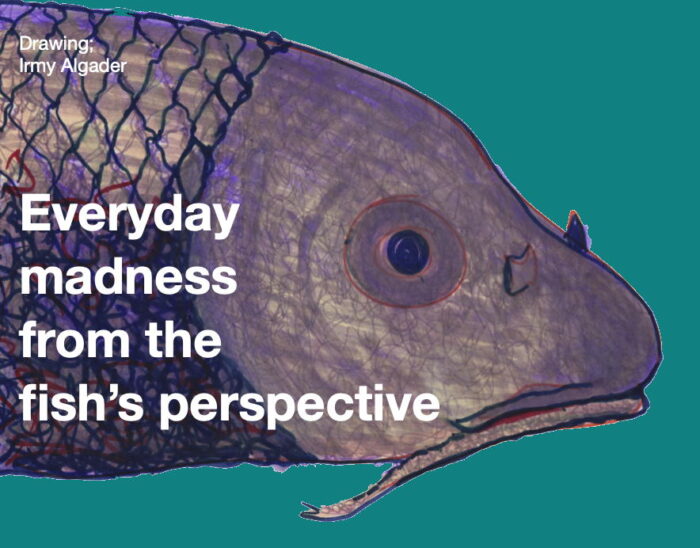
    [5] Animal welfare (the author presented ‚From the fish’s perspective — animal welfare beyond marketing‘ at Aquaculture Horizons 2025)


  • Alle starren aufs Meer hinaus, doch Leben stirbt auch in Seen und Flüssen

    Alle starren aufs Meer hinaus, doch Leben stirbt auch in Seen und Flüssen

    Ein Drittel der Tierarten in Süssgewässern sind gefährdet [1], und sogar ein Drittel aller Süsswasserfischarten [2]. Ein Mix verschiedener Ursachen ist dafür verantwortlich: Umweltverschmutzung, Staudämme, Entnahme von Wasser, veränderte Nutzung der umgebenden Landflächen und invasive Krankheiten. Aber es trifft ja nur die Süsswassertiere…

    Halt! Allein von allen Fischarten lebt gut die Hälfte der Arten in Süsswasser, also in Bächen, Flüssen, Tümpeln und Seen, die anderen 49% in Salzwasser [2]. Das ist umso erstaunlicher, als Süsswasser die grosse Ausnahmen auf unserem Planeten ist.

    Auf der Erde gibt es rund 1,4 Milliarden Kubikkilometer Wasser, das sind 1,4 Trilliarden Liter, also 1’400’000’000’000’000’000’000 Liter (1,4 * 1021 Liter). Fast alles Wasser befindet sich in den Meeren und Ozeanen, nur 2,5 Prozent sind Süsswasser, das meiste davon in Eis gebunden. Und nur 3 Prozent des Süsswassers, also etwa 1,05 Trillionen Liter (1’050’000’000’000’000’000 Liter,) sind in Gewässern vorhanden [3]. Das heisst, die Biodiversität der Fischarten in Süssgewässern spielt sich auf einem 325 Mal kleineren Raum ab als in den Meeren. Zudem ist dieser enge Raum steten Schwankungen unterworfen [4]

    Daraus kann geschlossen werden, dass die Artenvielfalt in Süssgewässern besonders wichtig ist, auch für uns Menschen [5], und dass ihre Bedrohung mindestens so ernst genommen werden muss wie jene der Vielfalt in den Meeren.


    Titelbild:
    Fische im Möserer See (Marco Almbauer / Wikimedia Commons)

    Quellen:

    [1] https://fb.watch/xfbqB80FPL/ (Kurzvideo TerraX)

    [2] https://www.fishsec.org/2021/02/25/one-third-of-freshwater-fish-populations-at-risk-of-extinction/

    [3] https://www.quarks.de/umwelt/faq-so-viel-wasser-gibt-es-auf-der-erde/

    [4] https://www.nature.com/articles/nature20584.epdf

    [5] https://www.energiezukunft.eu/umweltschutz/artenvielfalt-im-suesswasser-existenziell-fuer-menschen


  • Well equipped local services are key to combatting illegal fishing activities

    Well equipped local services are key to combatting illegal fishing activities

    The government of Bangladesh will introduce new regulations for the size and fabric of fishing nets to prevent unwanted bycatch of all kinds of fish due to indiscriminate mesh size. What are the chances of enforcement?

    Together with experts and local net manufacturers, the nets will be developed for the respective target species [1]. Back in March 2024, the Bangladeshi Fisheries Minister announced the government’s intention to restrict the production of illegal fishing nets, including monofilament nets [2], which are mainly used for gillnets and which, once lost in the water, become the most dangerous type of ghost nets because fish easily get caught in the finespun but strong synthetic fabric, which does not decompose for many years.

    Bangladesh could learn from Senegal’s mistakes

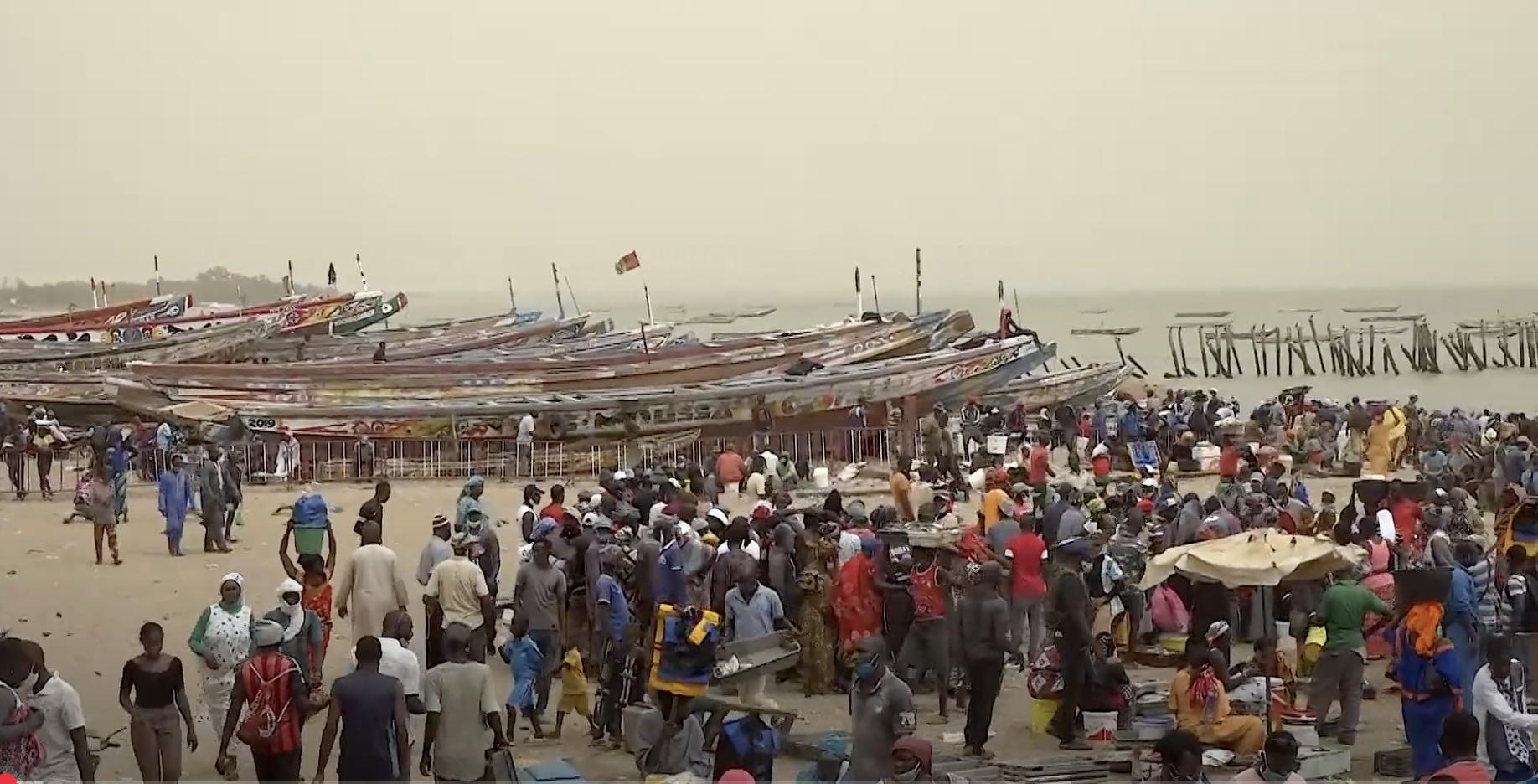
    As in many structurally weak countries with widespread poverty, particularly in informal sectors such as artisanal fishing, the main problem is the enforcement of rules against the short-term interests of some stakeholders. Senegal is an illustrative example of this problem. The West African republic, considered one of the best governed countries on the continent, banned monofilament as early as 1987. Despite this law, which has since been confirmed twice, the use of monofilament nets is still widespread in artisanal fisheries [2], as I observed during the fair-fish project I led in Senegal almost 20 years ago. Fisheries officers are occasionally sent out to inspect fishing gear, but too often reportedly look the other way when they come across monofilament nets; there are even officers who are not sure whether monofilament has really been banned [3]. Even the director of Senegal’s marine fisheries authority recently tried to downplay the threat posed by abandoned gillnets to already depleted fish stocks: ‘We still have fish,’ he said, in contrast to the serious scientific evidence.

    My own experiences with the local fisheries services were disappointing almost everywhere in Senegal. The officers in charge did not document the daily catches, so when they were asked for data by their superiors, if at all, they made it up, months or even years after the fact, giving the daily weighings to the nearest decimal point. They may not have neglected their work out of sheer laziness, but also under pressure from some fishermen or fishmongers.

    Governments should invest in brave officers

    However, I had the opportunity to befriend Eric, the then head of the fisheries service of one of the department in the Saloum, a remote region in the south of the country, from where all seconded civil servants, including doctors and teachers, tried to get a job in the capital Dakar as quickly as possible. Not so Eric. After being in charge of fisheries services at various points along the coast and having to leave again and again because he was performing his duties strictly, he ended up in the Saloum and knew that this was his last post. But even here he had trouble finding staff after two of his agents were severely beaten up in revenge for the confiscation of an irregular net.

    Therefore, investing in local fisheries services to equip them with enough trained staff and adequate means of transport and communication is absolutely key to combating and preventing illegal fishing activities. Regulations alone will never do the job.


    Title picture:
    Permitted gillnet made of monofilament in use by a Swiss artisanal fisherman (credit: Billo Heinzpeter Studer)

    References:

    [1] https://www.dhakatribune.com/bangladesh/370824/fisheries-adviser-farida-govt-to-regulate-size (thanks to ICSF for this link)

    [2] https://v4.infofish.org/index.php/component/k2/item/159-bangladesh-government-to-stop-manufacturing-of-current-fishing-nets

    [3] https://www.voanews.com/a/senegal-critically-endangered-dolphin-threatened-by-illegal-fishing-nets/7045150.html

  • Around 250 billion animals killed per year, many of which as appetisers

    * Based on data from [1] and Shujie Chen et al., IFFO, Björn Kok et al., and A. G. J. Tacon et al.

    Annual global shrimp production was 5.6 million tonnes in 2023 and is estimated to reach 5.7 million tonnes in 2024 [1]. Assuming an average live weight per shrimp of 20 grams [2], this means that around 250,000,000,000 shrimp were killed last year. That’s about twice as many as the number of fish farmed each year!

    Why is mankind farming one of the smallest of all farmed animals, and in exorbitant quantities? Wouldn’t it be wiser, if at all, to farm large aquatic animals such as the Arapaima, a Brazilian freshwater fish? This would at least significantly reduce the number of animals suffering.

    Amazingly, Ecuador is the leading shrimp-producing country, with an area similar to that of the United Kingdom, but only 18 million inhabitants, half of whom live in the coastal region, where one in five workers is employed in the shrimp industry. 25 per cent of the world’s shrimps by weight come from this Latin American country, while China and India, 37 and 13 times larger than Ecuador respectively, each with almost 80 times the population, follow in second and third place only. In addition, more than half of the world’s shrimp weight is produced in Asia, the world’s leading region for aquaculture in general.


    Reference and footnote:

    [1] https://www.facebook.com/photo?fbid=28830292729891376&set=a.762088143805211

    [2] varies from species to species and depends on age at harvest

  • Welchen Fisch essen? Am besten weniger!

    Welchen Fisch essen? Am besten weniger!

    Der in der NZZ am 18. Januar 2025 publizierte «Leitfaden für einen nachhaltigen Fischkonsum» [1] enthält ein paar Informationen, die bewusst Konsumierende leicht in die Irre führen könnten. Ich erlaube mir daher ein paar Hinweise.

    (mehr …)

In order to be less dependent on social media, whose owners pursue their own private goals, think.fish posts will first appear on our own blog
Summaries with a link to our blog will be posted on Facebook, LinkedIn, Substack, Bluesky, Telegram, Mastodon, and Instagram.

Suche:

Übersetzen · Translate

Alle Themen · All topics:


Artikelarchiv · Articles by date