Discover the enormous contradictions within the aquaculture industry in a single newsletter issue from an industry platform, from salmon farming in southern Africa to algae products in Scotland. Then choose your festive meal wisely.
The Fish Site [1] is my favourite news and analysis platform for the aquaculture industry. Today’s newsletter covers four topics that could not be more different.
The first article addresses the question of whether Namibia could become the new frontier of salmon farming. Salmons of the species Salmo salar live in the North Atlantic, while related species are found in the North Pacific. None of these species has ever been sighted in other seas, let alone south of the equator — with the exception of Salmo salar in net pens along the Chilean coast, which were brought there by Norwegian farming companies to replicate what had been done to the environment in the Norwegian fjords. And to the animals themselves, which have been proven to be unable to feel well in captivity [2]. So why farm them at all, in ever-increasing numbers and in ever more peregrine locations? In Namibia, its again the Norwegian industry looking to make a profit out of net pens in the cool waters off the coast [3].
The second article deals with the farming of Red drum (Sciaenops ocellatus), another species from the northeastern Atlantic, in Mauritius, said to be a potential ‚paradise for aquaculture‘. And again, it’s a project led by a European entrepreneur. [4] Since juvenile fishes prefer grassy marsh areas in bays and estuaries and later rocky substrates, it is questionable whether they feel comfortable in the aquaponic environment they have to cope with here.
The third article is about a European breakthrough in the reproduction of Manila clams (Ruditapes philippinarum), shortening its reproduction cycle by three months – ‘a significant step forward for the European shellfish industry’ [5]. We still do know little to nothing about the welfare of bivalves in captivity and during harvesting, but at least we know that farming mussels on ropes along the coast, where they filter their food from the water, is far less harmful to the environment.
The last article is about replacing fish oil with algae oil, which is produced from microalgae in a Scottish factory that uses waste from the whisky industry as a nutrient [5]. The oil, rich in long-chain omega-3 fatty acids (DHA), is intended for feeding pets and farmed fishes. The company claims that its production ‘will save six billion fishes annually by replacing marine-sourced omega-3’. As the system is scalable, many more fish could remain in the marine food web in the future.
And where’s my dinner?
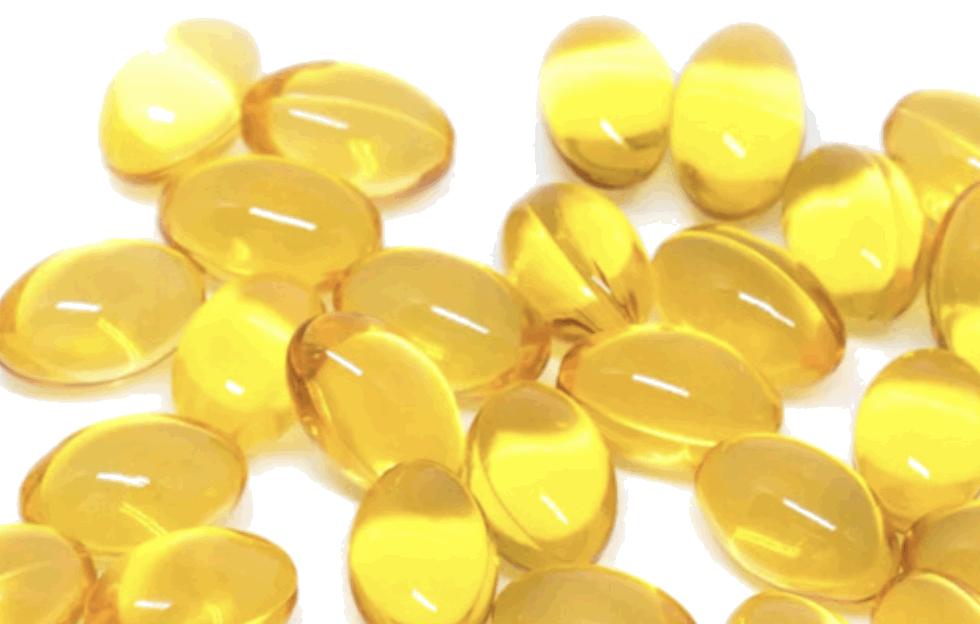
So, algal oil for Xmas dinner? Why not take your algal oil capsule before or after a responsible meal? Wanna know my favourite dish? Short sclices of pumpkin with pre-cooked chestnuts and sliced onions, sautéed in a wok or large frying pan with salt, curry, pepper, sweet and hot chilies, cowberries or pomegrenate seeds, and pine nuts or sunflower seeds. You may like to add finely sliced dates and apples. Serve with a topping of herbs and sour cream or vanilla ice cream. Delicious, I swear.
References:
[2] https://fair-fish-database.net/db/species/salmo-salar/farm/welfarecheck/
[3] https://thefishsite.com/articles/could-namibia-be-salmon-farmings-new-frontier
[4] https://thefishsite.com/articles/mauritian-aquaculture-through-one-womans-career
[5] https://thefishsite.com/articles/bivalvi-project-accelerates-manila-clam-production-by-three-months
[6] https://thefishsite.com/articles/ground-broken-for-major-algal-oil-facility
Schreibe einen Kommentar
Du musst angemeldet sein, um einen Kommentar abzugeben.