
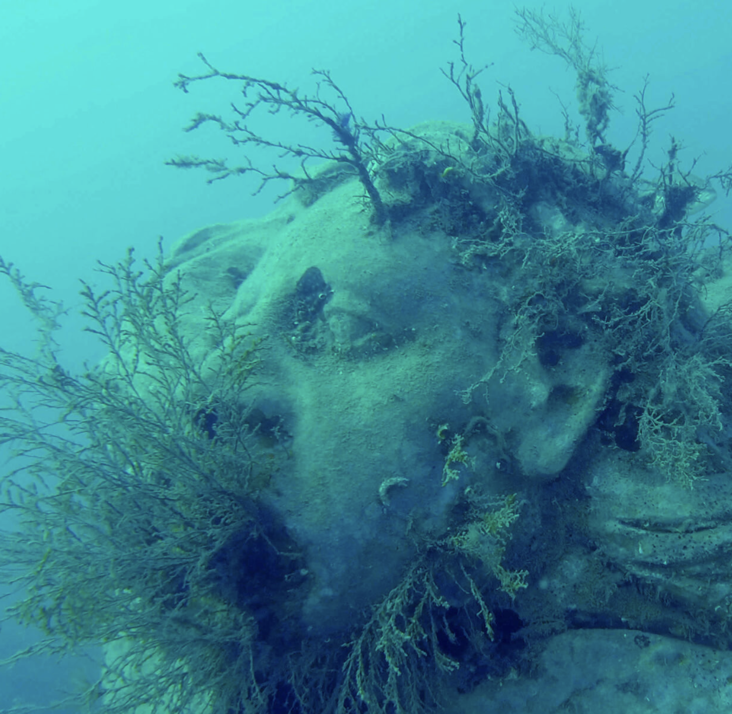
Dragging huge nets on heavy runners or rollers across the seadbed is the second most destructive fishing method after dynamite fishing. For years, many organisations have been calling for a ban on bottom trawling, so far to no avail. Local communities face the challenge of defending their fishing grounds on their own. Concrete blocks and art sculptures are their weapons.
Bottom trawling destroys the seabed and the creatures living there, is brutal towards the animals trapped in the net, and it is one of the methods with the highest proportion of unwanted and therefore discarded animals in the catch, thereby threatening not only the stocks of the target species but also of those in the by-catch.
I’d like to subscribe to the think.fish newsletter
An efficient way of keeping bottom trawlers off is to place objects on the seabed that the nets get caught on. In Cambodia, where illegal bottom trawling has decimated the fish stocks on which coastal communities have depended for generations, Marine Conservation Cambodia, the government and local fishing communities have begun placing large, heavy concrete structures on the seabed. Whereas marine life can colonise these structures, trawl become entangled in them [1].
In the Thyrranean Sea off the coast of Tuscany in Italy, fishermen and activists of the association ’Casa dei Pesci’ (house of the fishes) are using a similar tactic to drive away illegal and often mafia-linked bottom trawlers. In 2015, they began to create an ’underwater museum’ comprising meanwhile 24 Carrara marble sculptures in which the nets get stuck [2]. The underwater museum concept has since been replicated by activists in other locations, such as Panama, where an artist is creating steel scultures of several metres high.
References:
[1] https://oceanographicmagazine.com/news/concrete-towers-on-the-seabed-scupper-cambodias-illegal-trawling/
[2] https://www.casadeipesci.it/en/mission/
Schreibe einen Kommentar
Du musst angemeldet sein, um einen Kommentar abzugeben.