I always appreciate the sound and clear arguments of my colleague Lewis Bollard, who does important work as head of the farm animal welfare programme at Open Philanthropy (USA). Like him, I have always defended reputable certification schemes against radical criticism because they are, as Lewis puts it, ‘imperfect agents of change’, but change-oriented nonetheless, while industries that do not adopt certified policies simply continue in non-viable practices.
However, as far as I am concerned, I am first and foremost in defense of the animals, and I know Lewis is too. For most of my life I have worked amidst the contradictions between ideal living conditions for employed animals and attempts to improve their conditions step by step. My strategic approach has been a kind of pragmatic radicalism, while my operational work has been closer to establishing standards and certification, bringing stakeholders together to set good examples and make them models to copy. Nevertheless, I was always critical of the big certification schemes promoted by large non-governmental organisations, retail chains, and the industry, because I felt that more should be achieved for the animals, the environment and the workers — or the propaganda of these labels should be kept less gradiloquent. My personal compromise was to work for small pioneer projects with a high standard philosophy, first 20 years in land animal husbandry, then 27 years in aquaculture and fisheries. The following comments are mainly based on my experience in the second area.
The case of ‚fish welfare‘
Getting old ment getting angry in my case. My view of what goes under the banner of ‘fish welfare’ has become increasingly critical, radical, even impatient. In aquaculture, over the last ten years, ‚fish welfare‘, which only thirty years ago has been deprecatingly regarded as a crazy idea by a few cranks, has become a common denominator in the advocacy, scientific, retail and industry. This is undoubtedly a nice success for the pioneers. However, in practice and from the point of view of the fishes, real progress is modest when measured against the basic meaning of the term ‘welfare’. And I have the impression that most of those involved are satisfied with the few improvements achieved so far.
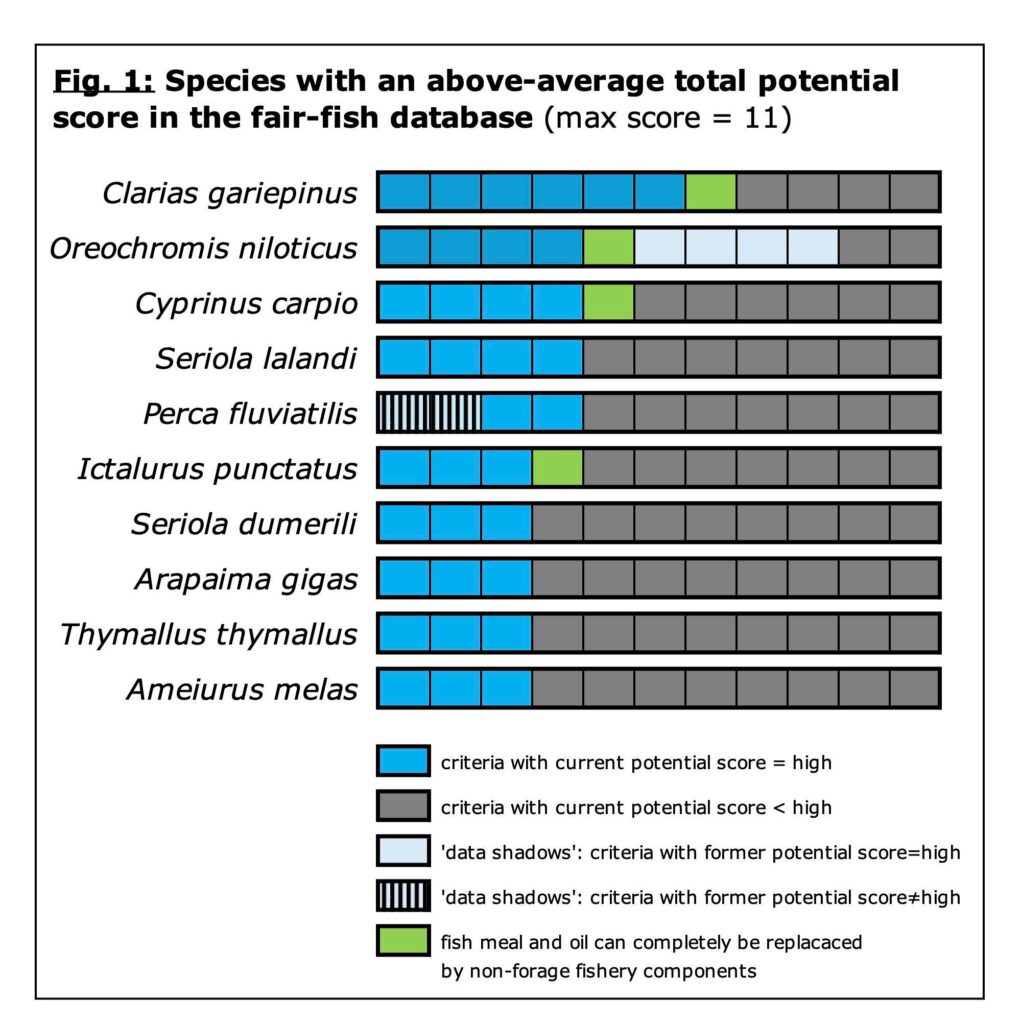
Do the fish really feel well under improved farming conditions? Thanks to research [3] by fair-fish international and FishEthoGroup, which was also generously supported by Open Philanthropy, we now know that the welfare potential of almost all farmed fish species is close to zero. They are not naturally able to experience welfare, i.e. to feel anywhere near as well as they do in the wild. They can’t, not even under the best possible farming conditions. It is obvious that we should stop investing research and money in farming species such as salmon, trout, sea bass, sea bream, halibut, turbot, sturgeon, and many others if we want to use the welfare claim for them. The real message for almost all products from aquaculture with improved living conditions would be: from fish that have suffered less.
Even more pressing is the question in fisheries: do fish feel well under more respectful fishing methods? Certainly not, not in any conceivable case! At best, they are stunned and killed immediately after being hooked or netted — in stark contrast to common fishing practices, but still: would you feel well being killed? The literal mislabelling is obvious, and again, we should call it a fish that has suffered less, if a fishery’s efforts even merit that claim.
A plea for a highest standard fish label
Two conclusions can be drawn from the above.
1) We could at least be honest enough to abandon the claim ‘animal welfare’ and instead talk about steps to minimise animal suffering.
2) Or we put animal welfare first and renounce any practice that is not in line with it. This would not necessarily mean renouncing animal products and their slaughter, provided it is done in a way that we ourselves would accept: a good life and a good death.
Certification schemes can pave the way for stricter rules that over time will bw followed by everyone in the industry. This is why they are a valid tool, as much as they may be criticised; as long as they learn from it and improve, progress can still be achieved across the industry in the long run. However, and especially in animal husbandry, certification schemes tend to prolong industrial practices that we should end as soon as possible for ethical and environmental reasons. The longer I have worked in this field, the more I have sided with the critics. In my experience, for all cases where animals are employed, we need certification systems that set the highest standards and can serve as a benchmark for all other schemes and policies, even when setting the example on a small market share only.
To give an example: In Switzerland, there is a small organisation called KAGfreiland, founded in 1972, which sets the highest organic and free-range standards for farm animal husbandry in the world and has built a small market based on cooperation between certified farmers, consumers and shops [2]. The example of KAGfreiland has forced the larger organic organisations to adopt stricter guidelines for animal husbandry. Similarly, fair-fish has developed and applied the world’s most ambitious fisheries certification system as part of its project with artisanal fishers in Senegal [4]. After the project came to an end, certification activities were discontinued, but the standard continued to serve as a benchmark.
I would like to encourage the pioneer stakeholders in fisheries and aquaculture to come together [5] and lead by examples in order to break their colleagues out of a certain complacency.
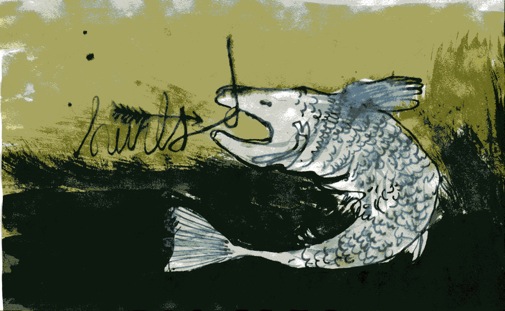
Title picture:
Drawing by Kasia Jackowska
References:
[1] Lewis Bollard: ‚In defence of the certifiers‚
[2] fair-fish database , then filter by ‚Welfare Score‘, ‚Potential‘
[3] https://kagfreiland.ch (the author has been its director, 1985-2001)
[4] fair-fish guidelines for aquaculture and fisheries (the author was the founder and has been the director and president of fair-fish, 1997-2023)
[5] Animal welfare (the author presented ‚From the fish’s perspective — animal welfare beyond marketing‘ at Aquaculture Horizons 2025)