
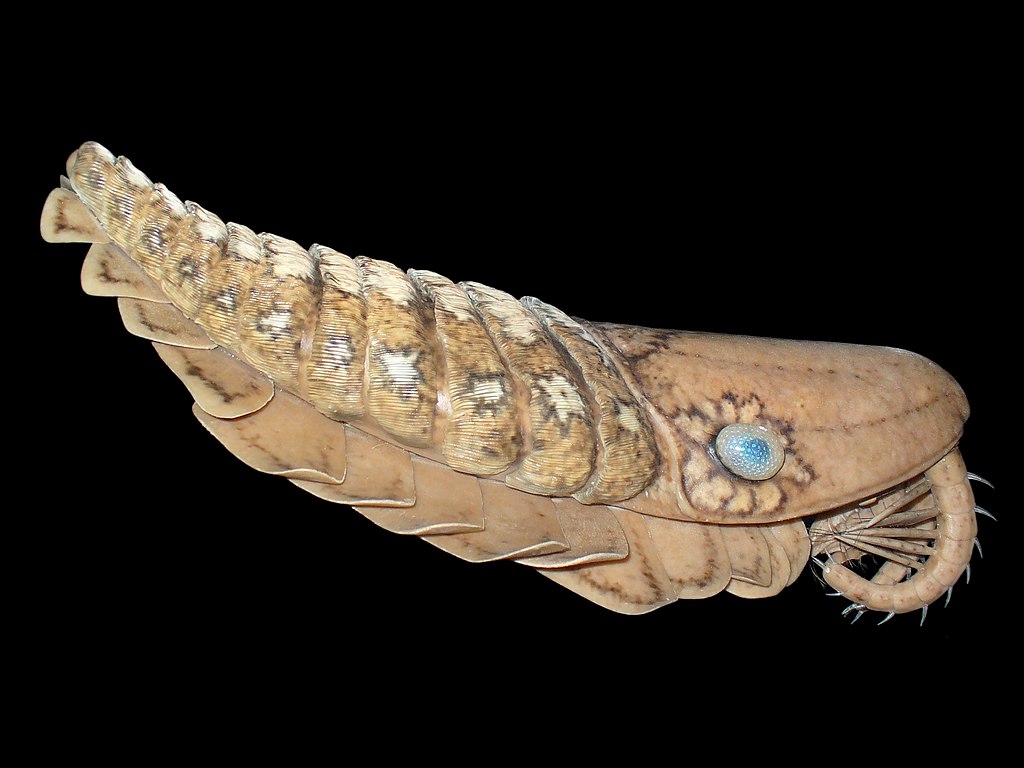
Did increasing oxygen levels provoke the explosive development of the animal kingdom in the Cambrium, or did changes in the behaviour of animals produce more oxygen?
Halfway right or halfway wrong, this is an interesting hypothesis the Quanta magazine [1] reports: that changes in the behaviour of animals might have triggered the raise of oxygen levels which led to the ’Cambrian explosion’ 540 million years ago with its rapid diversification of the animal kingdom and reshaped the environment.
It echoes the ’Anthropocene’ hypothesis (which I personally deem to be much too anthropocentric): the idea that a species could be able to reshape life by its behaviour to an extent that makes the planet enter a new geological epoch. But could a new epoch have been ushered in by a variety of aquatic species which all developed a diurnal vertical migration routine, feeding in shallow waters and returning to greater depth to metabolise and rest, thus ’ventilating”’the ocean? It could at least have intensified other concurrent chemical and physical changes.
The main news is: yes, behaviour can be a driver, and not just a function of a given ecological niche.
First published on 28.09.2021 on fair-fish’s blog (now offline)
[1]Jordana Cepelewicz: ’Complex Animals Led to More Oxygen, Says Maverick Theory’, in Quanta Magazine, 21.03.2018
Schreibe einen Kommentar
Du musst angemeldet sein, um einen Kommentar abzugeben.